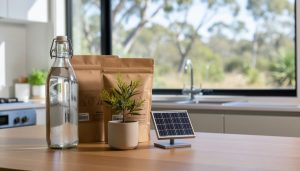
Australia’s solar industry stands at an exciting threshold. While conventional silicon panels have transformed rooftops across the country, the next generation of photovoltaic technology promises to shatter current efficiency barriers, slash costs, and unlock applications previously impossible with traditional designs.
Perovskite solar cells are leading this revolution, achieving laboratory efficiencies exceeding 33 percent while requiring minimal manufacturing energy compared to silicon production. Australian researchers at universities and CSIRO facilities are pioneering tandem cell designs that layer perovskite with silicon, potentially doubling energy capture from the same roof space. These breakthrough materials can be printed onto flexible surfaces, opening possibilities for curved installations on agricultural structures, vehicle surfaces, and even fabric applications.
Transparent solar panels represent another game-changing development. These invisible energy harvesters can transform greenhouse glass and building windows into power generators without blocking natural light, creating dual-purpose infrastructure that generates electricity while maintaining functionality. Queensland agricultural operations are already testing these systems on greenhouse facilities, producing crops and clean energy simultaneously.
Bifacial panels with advanced tracking systems are delivering 20 to 30 percent efficiency gains over fixed installations by capturing reflected light from both sides. Combined with artificial intelligence optimization, these systems automatically adjust throughout the day, maximizing energy production even during cloudy conditions common along Australia’s southern coast.
The timeline for widespread adoption is closer than many realize. Commercial availability of several next-generation technologies is expected within two to five years, making current planning decisions crucial for maximizing long-term renewable energy investments.
Why Today’s Solar Panels Are Already Yesterday’s Technology
The solar panels currently dotting Australian rooftops and solar farms are remarkable achievements, yet they’re already approaching their technological ceiling. Today’s conventional silicon panels typically convert only 15-22% of sunlight into electricity, leaving the vast majority of solar energy untapped. That’s not just inefficient—it’s a significant limitation when you’re trying to power a nation through clean energy.
These current-generation panels face real-world constraints that affect Australian households and businesses daily. They struggle on cloudy days and deliver nothing overnight. They require substantial roof space or land area to generate meaningful power, which creates challenges for urban properties and forces difficult choices about land use. In regional Australia, where space seems abundant, this still means competing with productive agricultural land—a trade-off that doesn’t sit well with many farmers.
Here’s the challenge: to meet Australia’s renewable energy goals of 82% renewable electricity by 2030, we need solar technology that works harder and smarter. Current panels simply can’t deliver the efficiency gains required within the available space.
The next generation of solar technology represents something genuinely different—not just incremental improvements, but fundamental breakthroughs. We’re talking about panels that capture previously wasted light wavelengths, materials that generate power from multiple angles simultaneously, and surfaces so thin they can be integrated into windows and building materials without anyone noticing.
This isn’t distant science fiction. These technologies exist today in laboratories and pilot projects, with some already entering commercial production. For environmentally conscious Australians, understanding what’s coming helps inform smarter investment decisions about when to upgrade and what solutions will genuinely future-proof their energy needs.
Perovskite Solar Cells: The Game-Changer Australia’s Been Waiting For
What Makes Perovskites Different
Perovskite solar cells represent a genuine game-changer in renewable energy technology. Unlike traditional silicon-based panels, these breakthrough solar materials use a crystal structure that can be manufactured at much lower temperatures, dramatically reducing production costs and energy requirements.
What truly sets perovskites apart is their remarkable flexibility. While conventional solar panels are rigid and heavy, perovskite cells can be printed onto lightweight, flexible surfaces. This opens up possibilities that were previously unimaginable. Think solar panels integrated into building facades, curved surfaces, or even portable applications for remote Australian communities and agricultural operations.
The manufacturing process is refreshingly straightforward. Perovskites can be applied using techniques similar to printing newspapers, making production faster and more accessible than traditional silicon processing. This could mean lower costs for consumers and easier deployment across regional Australia.
These panels also excel in low-light conditions, generating power even on overcast days or in shaded environments. For Australian farmers combining solar with bioenergy systems, this reliability is invaluable. Early trials at Australian research facilities have demonstrated efficiencies exceeding 25 percent, with laboratory versions reaching even higher.
Perhaps most exciting is their potential for tandem applications. Perovskites can be layered with existing silicon technology to capture different light wavelengths, maximising energy harvest from every ray of sunshine hitting your roof or property.

Australian Success Stories in Development
Australia is rapidly becoming a global powerhouse in perovskite solar technology, with several homegrown success stories lighting the way forward.
The University of New South Wales (UNSW) leads the charge through its groundbreaking work at the Australian Centre for Advanced Photovoltaics. Researchers there recently achieved a world record for perovskite silicon tandem cell efficiency, reaching an impressive 28.2 percent conversion rate. This achievement demonstrates that Australia isn’t just participating in the solar revolution, we’re helping drive it.
Meanwhile, Monash University in Melbourne has developed a printable perovskite technology that could revolutionise manufacturing costs. Their team successfully created solar cells using commercially viable printing techniques, similar to how newspapers are produced. This innovation could slash production expenses and make next generation panels accessible to everyday Australians much sooner than expected.
On the commercial front, Melbourne-based company Greatcell Solar has partnered with international manufacturers to bring perovskite technology from the lab to the marketplace. They’re focusing on flexible, lightweight panels perfect for Australian conditions, particularly in remote and agricultural applications where traditional rigid panels face limitations.
The Commonwealth Scientific and Industrial Research Organisation (CSIRO) has also thrown its weight behind perovskite development, testing these materials under harsh Australian climate conditions. Their research ensures these next generation panels can withstand our intense UV radiation and temperature extremes, addressing practical concerns about long-term durability.
These success stories prove that Australian innovation is helping shape the future of renewable energy, creating local jobs while tackling global climate challenges.
Tandem Solar Cells: Stacking Power Like Never Before
Real-World Applications for Aussie Homes and Businesses
Tandem solar cells are set to transform how Australian homes and businesses harness the sun’s energy, delivering practical benefits across diverse applications. For suburban rooftop installations, these next-generation panels mean homeowners with limited roof space can finally achieve energy independence. A typical Sydney terrace that might struggle to meet its electricity needs with conventional panels could generate 50% more power from the same area, potentially eliminating electricity bills entirely whilst feeding surplus energy back to the grid.
Commercial properties stand to gain enormously from this technology. Shopping centres, warehouses, and office buildings across Melbourne and Brisbane are already planning installations, where higher efficiency translates directly into improved return on investment. A Perth manufacturing facility recently piloted tandem cells on just half their roof space, generating enough power to run their operations whilst leaving room for future expansion.
Remote communities and agricultural operations represent perhaps the most exciting application. Cattle stations in the Outback, where conventional solar arrays require vast areas and expensive maintenance visits, could reduce their footprint by half whilst increasing reliability. Off-grid tourism operators in Tasmania and the Northern Territory are particularly interested, as tandem cells combined with battery storage offer genuine 24/7 energy security without the noise and fuel costs of diesel generators.
Mining operations are also exploring these panels for remote sites, where every kilowatt generated on-site reduces costly and carbon-intensive fuel transportation. The technology’s resilience in extreme temperatures makes it particularly suitable for Australia’s harsh conditions, turning our challenging climate into a renewable energy advantage.
Solar Panels That Work in the Dark: Thermophotovoltaic Technology
Imagine solar panels that don’t clock off when the sun sets. That’s the promise of thermophotovoltaic technology, a breakthrough that could transform solar energy from an intermittent power source into a round-the-clock workhorse.
Traditional solar panels have one fundamental limitation: they need sunlight. When clouds roll in or darkness falls, power generation drops dramatically. But thermophotovoltaic cells take a completely different approach. Instead of converting visible light directly into electricity, they capture heat radiation and transform it into power.
Here’s how it works in practical terms. During daylight hours, these systems absorb solar energy and store it as heat in special thermal batteries. After sunset, this stored heat continues radiating infrared light, which the photovoltaic cells convert into electricity. Think of it as having a thermal reservoir that keeps generating power long after conventional panels have gone dark.
Researchers at the University of New South Wales have been testing prototype systems that maintain power output overnight, achieving efficiencies of around 40 percent under laboratory conditions. That’s significantly higher than traditional silicon panels, which typically convert about 20 percent of incoming sunlight.
For remote Australian properties and mining operations where reliable 24/7 power is essential, this technology represents a game-changer. A cattle station in South Australia recently trialled an early thermophotovoltaic system, successfully powering water pumps and communications equipment through the night without diesel generators.
While commercial availability remains several years away, with experts suggesting 2028-2030 for widespread market entry, the technology addresses solar’s biggest weakness. Combined with declining costs and increasing efficiency improvements, thermophotovoltaic systems could finally deliver the holy grail of renewable energy: constant, reliable power generation without fossil fuel backup.
Transparent Solar Panels: Windows That Power Your Building
Imagine office towers and homes where every window generates clean electricity while still offering clear views – that’s the promise of transparent solar technology now making its way to Australian buildings. Unlike traditional dark solar panels, these revolutionary photovoltaic windows use special coatings that capture invisible ultraviolet and infrared light, converting it to power while letting visible light pass through naturally.
Several Australian projects are already testing this game-changing technology. The University of Melbourne recently installed transparent solar panels in research facilities, demonstrating how existing buildings can transform their glass facades into power generators without sacrificing natural lighting or aesthetics. The panels currently achieve 10-15% transparency with efficiency rates improving rapidly as the technology matures.
For Australian farmers, transparent solar offers brilliant applications for greenhouses and covered agricultural structures. You can protect crops while simultaneously generating electricity – a fair dinkum win-win for sustainable farming operations. Commercial buildings with extensive glass facades could offset substantial portions of their energy consumption, particularly when paired with advanced energy storage solutions to capture surplus generation.
While not yet matching traditional panel efficiency, transparent solar excels where conventional panels cannot go. Industry experts predict commercial availability for residential and commercial applications within 3-5 years, with costs dropping as manufacturing scales up. This technology represents a fundamental shift in how we think about building design, turning every sun-facing surface into potential renewable infrastructure without compromising functionality or appearance.

What This Means for Australian Farmers and Rural Communities
For Australian farmers, next-generation solar panels represent a game-changer that goes far beyond simply reducing electricity bills. These advanced technologies are opening exciting possibilities for agricultural operations across the country, particularly through agrivoltaics – the practice of combining solar energy generation with crop production on the same land.
Imagine solar panels elevated above grazing sheep or vegetable crops, providing shade that actually improves growing conditions during scorching summers while simultaneously generating power. Early trials in Queensland and South Australia are showing remarkable results, with some crops yielding 20-30% more produce under partial shade while the farmer generates additional income from electricity. It’s a win-win that makes every hectare work harder.
For remote farming operations, next-gen panels with their improved efficiency mean smaller, lighter systems can power irrigation pumps, electric fencing, stock watering systems, and monitoring equipment reliably. A cattle station in the Northern Territory recently shared how upgrading to high-efficiency panels halved their diesel generator use, saving thousands annually while reducing maintenance headaches in harsh, isolated conditions.
The real magic happens when these advanced solar systems work alongside bioenergy systems already producing power from agricultural waste. A dairy farm in Gippsland now combines biogas digesters processing manure with rooftop solar panels, creating a complementary energy mix that covers their needs around the clock – solar during peak daylight hours, biogas filling the gaps morning, evening, and overnight.
Next-gen panels with bifacial designs are particularly promising for Australian conditions, capturing reflected light from sandy soils or pale-coloured ground covers common across rural properties. For wheat and cotton growers considering renewable options, these innovations mean better returns on investment and faster payback periods, making the transition to clean energy increasingly practical rather than aspirational.

When Will These Technologies Reach Your Rooftop?
If you’re eager to get your hands on these breakthrough solar technologies, you’ll need a bit of patience—but not too much. The timeline varies depending on which innovation catches your eye.
Perovskite panels are closest to market reality. Several Australian trials are already underway, with commercial availability expected between 2025 and 2027. Early adopters should anticipate premium pricing initially—roughly 20-30% higher than traditional panels—but this premium will likely disappear within three to five years as manufacturing scales up. The real drawcard? Their superior efficiency could mean smaller installations producing the same power, potentially offsetting the higher upfront cost.
Tandem solar cells combining perovskite with silicon are following a similar trajectory, with major manufacturers targeting 2026-2028 for widespread release. These represent the sweet spot for many Australian businesses and farms looking to maximize output from limited roof space.
Bifacial and transparent solar technologies are available right now, though still commanding premium prices. However, government support is making them increasingly accessible. The Australian Renewable Energy Agency continues funding demonstration projects, while various state-based solar rebate programs now include next-generation technologies. Keep an eye on the New South Wales Empowering Homes program and South Australia’s Home Battery Scheme, which may expand to cover advanced solar installations.
For agrivoltaics enthusiasts, specialized panels designed for farming applications are entering the Australian market now, with several success stories emerging from Queensland and Victoria. These installations demonstrate how next-gen solar can complement existing agricultural operations without compromising crop yields.
The savvy approach? Stay informed through industry newsletters, connect with local solar installers familiar with emerging technologies, and consider joining early adopter programs. Your investment today in understanding these technologies positions you perfectly for tomorrow’s sustainable energy landscape.
Making the Transition: Combining Next-Gen Solar with Bioenergy
Australia’s renewable energy future doesn’t rely on a single solution, and that’s precisely where the magic happens. Forward-thinking farmers and businesses across the country are discovering that next-generation solar panels work brilliantly alongside bioenergy systems, creating resilient, round-the-clock power solutions.
Take the Mitchell family’s dairy operation in Gippsland. They’ve combined perovskite-silicon tandem panels with their existing biogas digester that processes cow manure. The solar panels generate abundant electricity during daylight hours, whilst their biogas system provides consistent baseload power at night and during cloudy periods. This hybrid approach means they’re completely energy independent, selling excess power back to the grid year-round.
The beauty of combining renewable technologies lies in their complementary nature. Next-gen solar excels at peak production during Australia’s abundant sunshine hours, whilst bioenergy systems convert agricultural waste, food scraps, and organic materials into reliable 24/7 electricity and heat. Together, they eliminate the intermittency challenge that sometimes limits solar-only installations.
Industries with significant organic waste streams are particularly well-positioned for this transition. Food processing facilities, breweries, and large-scale farms can deploy advanced solar arrays on rooftops and unused land whilst simultaneously processing their waste into biogas. The solar panels handle daytime energy demands, and the bioenergy system ensures continuous operation regardless of weather conditions.
For regional communities, this hybrid model offers genuine energy security. It reduces transmission losses, creates local jobs in installation and maintenance, and transforms what were once disposal costs into revenue streams. The transition isn’t about choosing between technologies but rather strategically combining them to build a truly sustainable, reliable energy ecosystem tailored to Australian conditions.
Australia stands at an extraordinary threshold in renewable energy transformation. The next generation of solar panels isn’t just a technological upgrade—it’s a genuine game-changer that will reshape how we power our homes, businesses, and communities. From perovskite cells delivering unprecedented efficiency to transparent solar windows turning every building into a power station, these innovations are closer than you might think.
The beauty of this renewable revolution is that you don’t need to wait on the sidelines. Start preparing now by staying informed through industry publications and local renewable energy networks. Connect with community solar initiatives in your area—many councils and regional groups are already planning for these advanced technologies. If you’re considering solar installation, speak with providers about infrastructure that’s compatible with future panel upgrades, ensuring your investment remains relevant as technology evolves.
For farmers and regional Australians, agrivoltaic systems represent a particularly exciting opportunity. Begin conversations with agricultural extension officers about how next-generation panels could complement your operations while protecting crops and livestock.
The transition to advanced solar technology works hand-in-hand with other renewable solutions like bioenergy, creating a robust, diversified energy ecosystem. Together, these technologies ensure Australia’s energy independence and environmental stewardship for generations to come.
The future isn’t something that simply happens to us—it’s something we actively create. By embracing these emerging solar innovations today, you’re not just reducing your carbon footprint; you’re becoming part of Australia’s clean energy story. The sun has always powered this land. Now, we’re finally learning to harness it properly.