
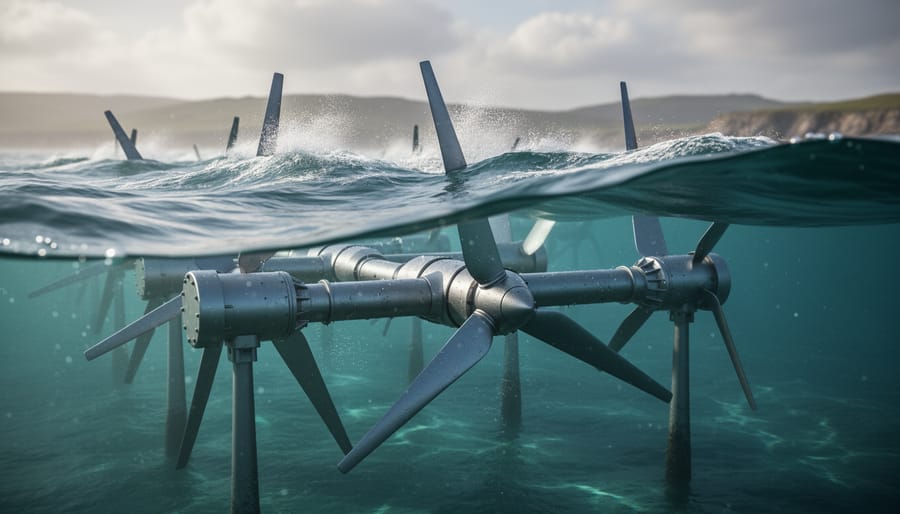
Hydrokinetic energy is electricity generated from the natural movement of water in rivers, tidal currents, and ocean waves, without the need for dams or reservoirs. Unlike conventional hydropower that relies on stored water behind large barriers, hydrokinetic systems harness the kinetic energy of flowing or moving water through submerged turbines and conversion devices installed directly in waterways.
For Australia, this technology represents a particularly promising frontier. Our vast coastline stretches more than 34,000 kilometres, with powerful tidal flows in locations like the Kimberley region and Torres Strait. Meanwhile, thousands of rivers course through the continent, many with consistent flows that could power regional communities without the environmental disruption of traditional dam construction. Sustainable hydrokinetic energy offers remote stations, island communities, and coastal towns a path to renewable baseload power using resources already flowing past their doorsteps.
What makes hydrokinetic technology compelling in 2026 is its minimal footprint. Fish can swim around the turbines. Boats can navigate above them. The natural flow of water continues largely undisturbed, yet electricity flows reliably to the grid or local networks. This article explains exactly how these systems work, the different types available today, and where they’re making the biggest impact across Australia and globally. Whether you’re a property owner near a river, a council exploring renewable options, or simply curious about emerging clean energy technologies, understanding hydrokinetic energy reveals practical solutions already generating power in real-world conditions.
What Hydrokinetic Energy Means
Hydrokinetic energy is electricity generated by capturing the kinetic energy of naturally flowing water, rivers, tides, and ocean currents, without building dams or creating reservoirs. Instead of blocking a waterway and relying on the potential energy of stored water at height, hydrokinetic systems use turbines or rotors placed directly in the current. As water flows past, it turns the blades, which drive a generator to produce power. Think of it as an underwater wind farm: the moving water does the work, and the technology simply harvests that motion.
- Hydrokinetic Energy
- Electricity generated from the kinetic energy of moving water in rivers, tides, and ocean currents, without the need for dams or reservoirs.
- Kinetic Energy
- The energy of motion. In hydrokinetic systems, it’s the energy carried by water as it flows naturally downstream or with tidal movements.
- Free-Flow Systems
- Hydrokinetic devices that operate in open water without altering the waterway’s natural flow or requiring impoundment structures.
- Run-of-River Technology
- A broader term for systems that generate power from a river’s natural flow. Hydrokinetic is a subset that requires no diversion or water level changes.
This distinction matters. Traditional hydroelectric dams flood large areas, disrupt river ecosystems, and displace communities. Hydrokinetic installations, by contrast, sit on or near the riverbed or seabed, allowing water, fish, and sediment to pass largely undisturbed. That makes them a low-impact renewable option, especially attractive for sensitive environments or locations where dam construction isn’t feasible.
Australia has enormous untapped potential. The country’s northern coastlines experience some of the world’s highest tidal ranges, and major river systems like the Murray-Darling offer consistent flow in certain reaches. Offshore, the East Australian Current and other ocean currents represent vast energy reserves. While the technology is still maturing, pilot projects and research into Sustainable Hydrokinetic Energy Systems are positioning Australia to harness these resources cleanly and efficiently, contributing to the national renewable energy mix without the environmental footprint of large-scale hydro.
How Hydrokinetic Energy Works
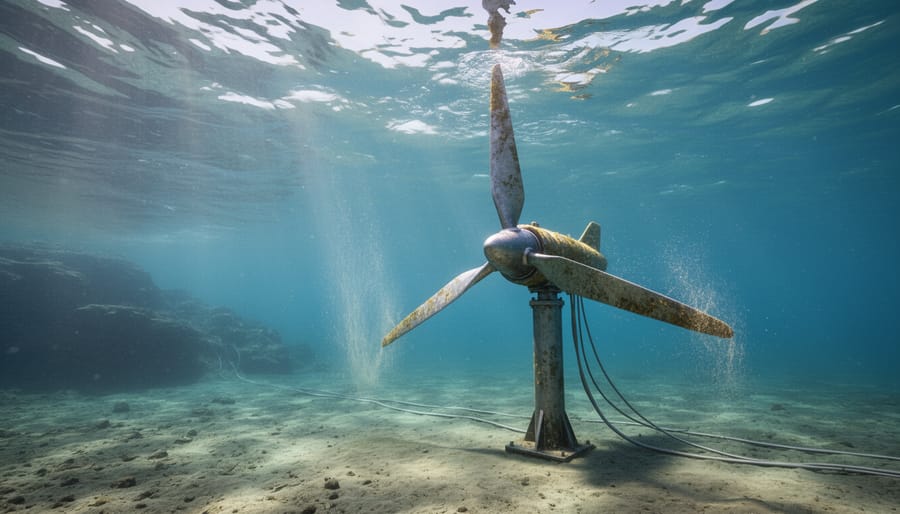
Hydrokinetic energy conversion follows a straightforward mechanical process that mirrors how wind turbines generate electricity, except everything happens underwater where water’s density makes the physics far more powerful.
The process starts with flowing water, whether from a river current, tidal flow, or ocean stream, striking the blades of a submerged turbine or rotor. As the water pushes against these blades, it forces them to rotate. Because water is roughly 800 times denser than air, even relatively slow-moving currents (around 1-3 metres per second) can spin turbine blades with considerable force. This density advantage means hydrokinetic systems can extract significant energy from flows that would seem gentle to the eye.
The rotating blades connect to a central shaft, which turns a generator housed in a watertight nacelle. Inside this sealed unit, the mechanical rotation converts into electrical energy through electromagnetic induction, the same principle used in conventional power plants, just on a smaller, modular scale. The generator produces alternating current electricity, which travels through subsea cables to shore-based infrastructure where it’s conditioned and fed into the grid or used locally.
Water velocity plays the dominant role in energy capture. Power output increases with the cube of flow speed, meaning a current moving at 2 metres per second delivers eight times more power than one at 1 metre per second. This cubic relationship explains why developers target sites with consistent, moderately fast flows rather than sluggish waterways. Australian rivers with reliable flows and northern tidal zones with strong tidal currents offer particularly good conditions.
Turbine design directly affects efficiency. Horizontal-axis turbines (resembling underwater windmills) work well in unidirectional flows like river currents. Vertical-axis designs handle multidirectional flows better, making them suitable for tidal environments where water reverses direction with each tide change. Ducted turbines use shrouds to accelerate water through the rotor, boosting energy capture in slower flows.
Overall system efficiency typically ranges from 35% to 45% of the theoretical maximum extractable energy, with variations depending on turbine type, installation depth, and flow characteristics. Developers continue refining blade profiles, materials, and control systems to push these figures higher while reducing manufacturing and maintenance costs.
Types of Hydrokinetic Energy Systems
River Current Turbines
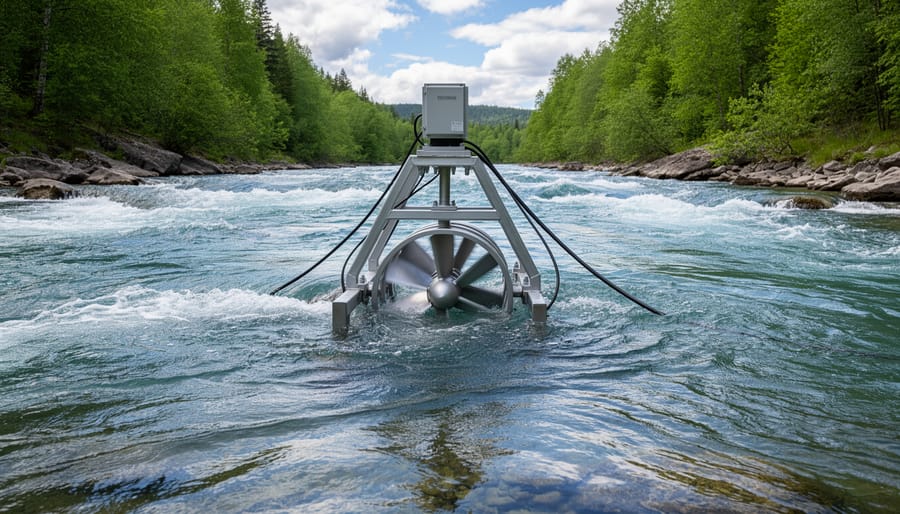
River current turbines sit on riverbeds or are suspended mid-stream, capturing the kinetic energy of natural water flow without needing dams or reservoirs. These devices typically feature horizontal-axis rotors (similar to underwater wind turbines) or vertical-axis designs that spin regardless of current direction. As water flows past, it rotates the blades, which drive a generator to produce electricity.
This approach suits rivers with consistent year-round flow and moderate to strong currents, ideally above 1.5 metres per second. In Australia, northern tropical rivers like the Fitzroy in Western Australia and sections of the Murray-Darling system show potential, particularly during wet-season high flows. Because they don’t alter water levels or block fish migration, river current turbines have minimal ecological footprint compared to conventional hydro. Installation is relatively straightforward, and turbines can be scaled from small units powering remote stations to arrays serving regional grids.
Tidal Stream Generators
Tidal stream generators work in coastal waters and estuaries, where tides push massive volumes of water in and out twice a day. These turbines resemble underwater windmills, mounted on the seabed or suspended mid-water to intercept the tidal current. Because tides follow lunar cycles, the energy output is highly predictable, you know exactly when peak flows will occur weeks in advance.
Australia’s northern coastline experiences some of the world’s most dramatic tidal ranges, with parts of the Kimberley region seeing fluctuations over 11 metres. Narrow channels, headlands, and reef passages amplify current speed, creating ideal conditions for tidal generators. Sites like King Sound and the Dampier Archipelago have attracted research interest, though deployment remains at pilot scale.
The technology suits locations where strong tidal flows persist year-round. Unlike river systems that vary with rainfall, tidal currents deliver consistent, renewable energy without damming rivers or flooding land.
Ocean Current Systems
Ocean current systems represent the most ambitious category of hydrokinetic technology, designed to tap into powerful, persistent flows found far offshore. Unlike tidal generators anchored in coastal shallows, these devices are engineered for the deep ocean, where massive currents like the Gulf Stream or East Australian Current (EAC) move vast volumes of water continuously in the same direction.
The EAC flows southward along Australia’s east coast, carrying warm tropical water at speeds that can exceed two metres per second. This consistency makes it an attractive target for large-scale energy generation. Proposed systems include floating platforms with submerged turbines tethered to the seabed, and arrays of rotors positioned in the strongest current zones.
Technical challenges are significant: extreme installation depths, distance from shore for transmission, corrosion from saltwater, and marine growth on components. Maintenance at sea adds cost and complexity.
Despite these hurdles, ocean current energy offers immense potential. A single installation in the EAC could generate power around the clock, feeding coastal cities with reliable renewable electricity. Australia’s geography positions it well to pioneer this frontier as the technology matures.
Where and How Hydrokinetic Energy Is Used
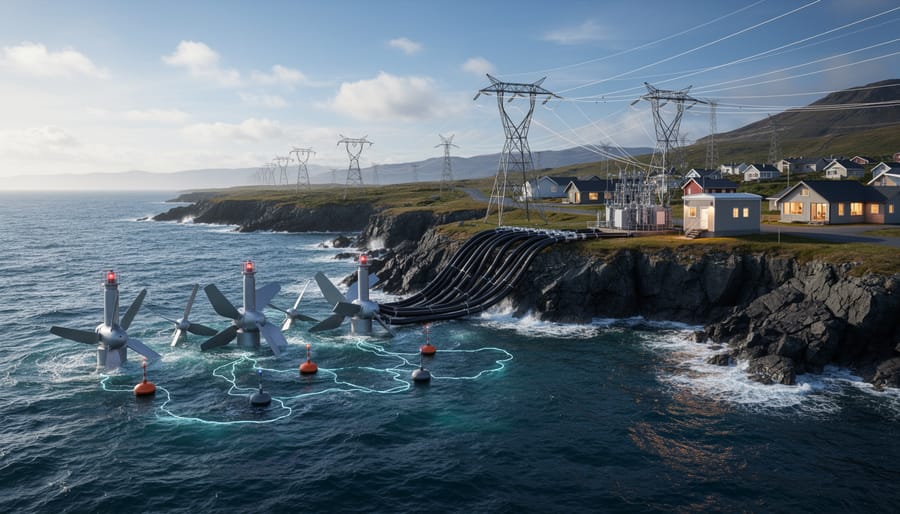
Hydrokinetic energy is already powering real communities and grid systems around the world, proving its value beyond the lab. In Scotland, the MeyGen project in the Pentland Firth has become the world’s largest tidal stream array, delivering clean electricity to thousands of homes since 2016. Canada’s FORCE test site in the Bay of Fundy hosts multiple tidal turbines feeding directly into Nova Scotia’s grid, demonstrating how coastal nations can tap predictable marine flows. Closer to home, Australia’s Bass Strait has been identified as a prime candidate for tidal energy deployment, with pilot feasibility studies underway to assess how hydrokinetic systems could complement the smart renewable grid in Tasmania and Victoria.
Remote and island communities stand to gain the most immediate benefits. Alaska’s Igiugig village operates a river turbine that provides consistent electricity year-round, reducing reliance on expensive diesel generators. Similar setups could transform energy access for Aboriginal communities along northern Australian rivers like the Daly or Fitzroy, where flowing water is abundant but grid connections remain costly or impractical. These installations require minimal land, fit alongside existing water uses like fishing or recreation, and operate silently beneath the surface.
Hybrid renewable systems represent another compelling use case. Hydrokinetic turbines generate power continuously day and night, filling gaps when renewable wind energy drops or solar panels go dark after sunset. In the Philippines, small tidal generators paired with solar arrays have stabilized energy supply for coastal villages, eliminating blackouts during calm weather. Australian microgrids in the Kimberley or Torres Strait could adopt similar models, blending tidal flows with existing renewables to ensure uninterrupted service.
The practical advantages extend beyond energy output. Installation leaves riverbeds and coastlines largely undisturbed, avoiding the habitat destruction and relocation issues tied to dam construction. Maintenance crews can retrieve turbines for servicing without draining reservoirs or halting river flow, keeping both ecosystems and energy supply intact.
Benefits and Challenges of Hydrokinetic Energy
Hydrokinetic energy offers compelling advantages that align perfectly with Australia’s renewable energy goals. As a truly renewable resource, it generates electricity from natural water movement, rivers, tides, and ocean currents, without depleting any fuel source. Tidal systems deliver exceptional predictability compared to solar or wind; tides follow reliable lunar cycles, allowing operators to forecast energy output weeks in advance. This consistency makes hydrokinetic power an excellent complement to variable renewables, and pairs well with hydrogen for storage in hybrid systems.
Australia’s 35,000-kilometre coastline and strong tidal ranges in northern waters create ideal deployment zones. Unlike solar farms or wind towers, hydrokinetic turbines operate underwater, preserving coastal views and minimising visual impact. Environmental disruption stays low because these systems require no dams or reservoirs; fish can often swim around turbines, and carefully sited installations avoid sensitive habitats.
The challenges, however, are real. Technology maturity lags behind solar and wind; most hydrokinetic systems remain in pilot or demonstration phases, with limited commercial-scale deployments worldwide. Upfront installation costs run high due to marine engineering requirements, turbines must withstand saltwater corrosion, strong currents, and storm conditions. Maintenance presents ongoing difficulties; underwater inspections and repairs demand specialised vessels and divers, driving operational expenses above land-based renewables.
Regulatory frameworks in Australia are still evolving. Developers navigate complex approvals across federal, state, and Indigenous stakeholder processes, and environmental impact assessments must address marine ecosystems with less precedent than terrestrial projects. Despite these hurdles, the trajectory is promising. Costs are falling as designs improve, and pilot projects in Tasmania and the Kimberley demonstrate growing feasibility. Hydrokinetic energy is not yet mainstream, but it is advancing steadily toward a practical role in Australia’s clean energy future.
Common Questions About Hydrokinetic Energy
Is hydrokinetic energy the same as hydroelectric power?
Not quite. Traditional hydroelectric power relies on dams to store water and create height difference, while hydrokinetic systems extract energy directly from moving water without any impoundment. Think of it as the difference between a waterfall and a flowing stream, both generate power, but hydrokinetic technology works with the current itself.
How much electricity can hydrokinetic systems generate?
Individual river turbines typically produce between 5 and 100 kilowatts, enough to power small communities or farms. Tidal and ocean current installations can scale much larger, with commercial arrays potentially generating several megawatts. The actual output depends on water velocity, turbine size, and site conditions, faster currents mean more power.
What’s the environmental impact?
Hydrokinetic systems have minimal environmental footprint compared to dams. They don’t flood land, block fish migration, or alter river flow patterns. Marine life can generally swim around the slow-moving turbines, though careful site selection and monitoring remain important to protect sensitive species and habitats.
Is hydrokinetic energy viable in Australia?
Absolutely. Australia’s northern coastline experiences strong tidal flows, the East Australian Current offers powerful ocean energy, and several major rivers have consistent flow suitable for turbines. While the technology is still maturing here, pilot projects and feasibility studies show real promise, particularly for remote coastal communities currently dependent on diesel generators.
These questions reflect what most people wonder when first encountering hydrokinetic energy. The technology offers genuine opportunity for Australia, especially as costs decline and more installations prove their reliability. You’ll likely see more pilot projects emerge along the Queensland and Northern Territory coasts over the next few years, demonstrating how natural water movement can contribute clean, predictable power to the grid without the massive infrastructure traditional hydro demands.
Hydrokinetic energy stands at an exciting crossroads in Australia’s renewable energy journey. While the technology is still maturing, the foundations are firmly in place, proven turbine designs, successful pilot projects internationally, and a growing understanding of how to harness our abundant water resources without the environmental trade-offs of traditional dams.
Australia’s geographic advantages are hard to ignore. Our extensive coastline, powerful tidal zones in the north, strong ocean currents, and major river systems create natural laboratories for hydrokinetic deployment. As installation costs decrease and efficiency improves, these assets position us to become genuine leaders in sustainable water energy generation.
The path forward isn’t without challenges, regulatory frameworks need refinement, manufacturing capacity must scale, and marine installation techniques continue evolving. Yet progress is tangible. Universities are partnering with industry, government agencies are mapping viable sites, and international success stories provide blueprints we can adapt to Australian conditions.
For environmentally conscious Australians, hydrokinetic energy represents exactly the kind of innovation our transition demands: renewable, low-impact, predictable, and capable of complementing solar and wind in a diverse energy mix. The technology won’t solve everything overnight, but it offers real potential to power coastal communities, strengthen grid resilience, and reduce our carbon footprint.
Keep watching this space. The current is building, and Australia has every reason to ride it.