

The digital entertainment industry consumes approximately 200 terawatt-hours of electricity annually, and online gaming platforms represent a growing share of that demand. Powering platforms like moonbet online casino with renewable energy sources, particularly bioenergy, reduces carbon emissions by up to 90% compared to fossil fuel-based operations while supporting responsible gaming practices that protect both players and the planet.
This intersection matters more than many realise. Every spin of a virtual roulette wheel, every dealt hand of blackjack, runs on server farms that traditionally rely on coal and gas. Australian online casino operators are beginning to shift this equation, partnering with renewable energy providers to run data centres on solar, wind, and biomass. The results speak for themselves: several platforms have already achieved carbon-neutral status, proving that entertainment and environmental stewardship aren’t opposing forces.
For players, choosing sustainably powered gaming platforms represents a practical way to align recreation with values. The carbon footprint of a typical evening’s online gaming can match a 50-kilometre car journey when powered by conventional grids. Switch to a renewable-backed operator, and that footprint drops dramatically.
The concept extends beyond energy sources. Responsible casino play shares core principles with sustainability: moderation, mindful resource use, and long-term thinking over short-term excess. Setting deposit limits and session timers mirrors the discipline required to transition entire industries toward renewable infrastructure.
Australian operators are uniquely positioned to lead this shift. With abundant solar resources and a growing bioenergy sector converting agricultural and forestry waste into reliable power, the infrastructure exists. What’s needed now is awareness among players and commitment from platforms to make green gaming the standard, not the exception.
The Hidden Energy Footprint of Digital Gaming
Most Australian online casino players never see the massive infrastructure humming away behind their favourite pokies or blackjack tables. Yet every spin, every shuffle, and every live dealer stream requires substantial computing power, and that power has to come from somewhere.
Data centres form the backbone of digital gaming, housing thousands of servers that process millions of transactions simultaneously. These facilities maintain Australia’s connection to international gaming platforms, handle real-time game mechanics, manage player accounts, and store vast amounts of encrypted data. Unlike a traditional casino that can simply switch off the lights at closing time, online gaming infrastructure runs 24/7, demanding constant electricity to keep servers operational and cool.
The cooling systems alone account for roughly 40% of a data centre’s total energy consumption. High-performance processors generate intense heat, and maintaining optimal temperatures is essential to prevent hardware failures that would disrupt gaming operations. In Australia’s warmer climate, this cooling burden becomes even more pronounced during summer months, creating seasonal spikes in energy demand.
Live dealer games represent a particularly energy-intensive segment of online gaming. These streams require high-definition video feeds, broadcast servers, multiple camera angles, and real-time interaction systems. A single live casino studio can operate dozens of tables simultaneously, each with its own lighting rig, cameras, and broadcast equipment, all supported by redundant server infrastructure to ensure uninterrupted play.
Beyond the servers themselves, Australia’s digital gaming sector relies on network infrastructure that connects players to platforms. Content delivery networks distribute data across multiple locations to reduce latency, mobile gaming requires cellular tower infrastructure, and payment processing systems add another layer of energy consumption that most players never consider.
The sheer scale becomes clearer when we recognise that Australia’s digital entertainment industry, including gaming, streaming, and cloud services, now represents approximately 8% of the nation’s total electricity consumption. As online gaming continues growing in popularity, this percentage climbs higher each year.
This energy footprint matters enormously for Australia’s renewable energy transition. The federal government has committed to reaching 82% renewable electricity by 2030, and achieving this target means every sector must reduce reliance on fossil fuels. Gaming platforms powered by coal or gas-fired electricity actively work against these national goals. Conversely, operators who switch to renewable energy sources can significantly reduce the carbon intensity of digital entertainment, transforming an energy-hungry industry into a potential showcase for clean power applications.
Why Responsible Operators Are Going Green
The Business Case for Clean Energy Gaming
For online casino operators in Australia, transitioning to renewable energy isn’t just environmental virtue, it’s smart business strategy that delivers measurable returns across multiple fronts.
The cost equation speaks for itself. Solar and wind power have become genuinely cheaper than coal-fired electricity across most of Australia, with renewable PPAs (power purchase agreements) now offering long-term price stability that fossil fuels simply can’t match. Data centres running 24/7 consume enormous amounts of electricity, making even modest percentage savings translate to six or seven-figure annual reductions in operating costs. When Sydney-based gaming platforms lock in renewable energy contracts today, they’re hedging against future carbon pricing while securing predictable energy expenses for years ahead.
Regulatory winds are shifting rapidly. The Australian government’s digital infrastructure guidelines increasingly expect carbon disclosure from high-energy operations, and several state jurisdictions are introducing preferential licensing conditions for companies demonstrating genuine environmental commitments. Operators who move early avoid the costly scramble when regulations tighten further, positioning themselves as compliance leaders rather than laggards.
Brand reputation carries commercial weight in Australia’s competitive gaming market. Sustainability credentials now feature prominently in operator marketing, with environmental responsibility becoming a legitimate differentiator among platforms offering similar games and odds. Corporate social responsibility reports highlighting renewable energy use strengthen relationships with payment processors, software providers, and advertising partners who face their own stakeholder pressure around environmental values.
Perhaps most compelling: consumer preference is evolving. Research shows Australian millennials and Gen Z players, the demographic driving online gaming growth, increasingly factor environmental considerations into purchasing decisions across all sectors, including digital entertainment. Operators powered by clean energy tap into this values-driven segment while future-proofing their customer base against shifting cultural expectations.
The business case builds itself: lower costs, regulatory readiness, stronger brand equity, and access to growth demographics. Clean energy gaming isn’t corporate charity, it’s competitive advantage.
What Australian Players Actually Think About Green Gaming

Australian players are increasingly factoring environmental considerations into their leisure choices, and online gaming is no exception. While price, game selection and bonuses still dominate decision-making, a growing segment, particularly among under-35s, now checks whether platforms demonstrate genuine environmental commitments before signing up.
Recent consumer research shows that roughly 40% of Australian online entertainment users say a company’s sustainability practices influence their platform loyalty. This isn’t just virtue signalling: these players actively seek out operators running on renewable energy and are willing to switch providers if a competitor offers comparable gaming experiences with a smaller carbon footprint. The shift mirrors broader trends in Australian consumer behaviour, where environmental credentials have moved from nice-to-have to expected standard across industries.
What’s particularly interesting is that players don’t necessarily want platforms to be perfect, they want transparency and effort. Clear energy sourcing information, carbon offset programs, and genuine renewable energy partnerships build trust far more effectively than vague “we care about the planet” marketing copy. Australian gamers can spot greenwashing quickly, and operators caught exaggerating their green credentials face swift backlash on forums and review sites.
The gaming industry itself recognizes this momentum. Research from the Playing For The Planet Alliance demonstrates that games can shape attitudes toward environmental action, suggesting a reciprocal relationship: environmentally conscious players choose green platforms, and those platforms in turn normalize sustainability as an industry standard. For Australian operators, this presents both challenge and opportunity, meet rising environmental expectations or risk losing market share to competitors who do.
Renewable Energy Solutions Already Powering Australian Gaming Platforms
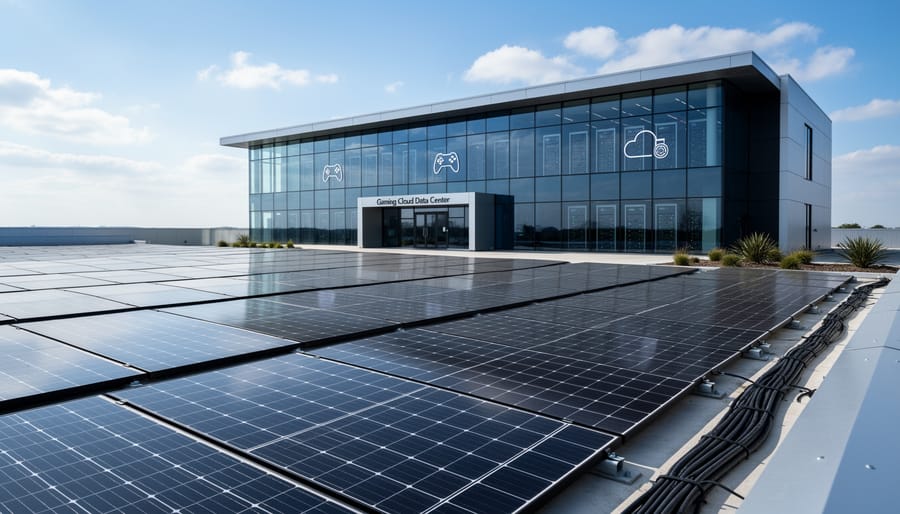
The online gaming industry’s shift toward clean energy isn’t just talk, several operators and data centre providers have already made substantial progress, proving that high-performance digital entertainment and environmental responsibility can coexist.
Australia’s largest cloud infrastructure providers now power significant portions of their server farms with renewables. NextDC, which hosts gaming platforms alongside other digital services, committed to 100% renewable energy for its Sydney and Melbourne facilities by 2025, drawing primarily from wind power contracts across regional Victoria and New South Wales. Their M1 Melbourne data centre runs on a mix of wind and solar for data centres cutting carbon emissions by 85% compared to grid-standard power while maintaining the 99.999% uptime gaming platforms demand.
International operators serving Australian players have set benchmarks worth noting. Kindred Group, which operates multiple casino brands globally, achieved carbon neutrality across all operations in 2020 and now sources renewable electricity for every server location. They’ve installed solar arrays at their Malta headquarters and purchase renewable energy certificates for regions where direct clean power procurement isn’t yet feasible. The result: a 98% reduction in carbon emissions per customer session since 2018.
Gaming platforms are implementing diverse renewable strategies:
- Solar-powered data centres with battery storage for overnight operations
- Carbon offset programs investing in Australian reforestation and renewable projects
- Wind energy power purchase agreements guaranteeing long-term clean electricity supply
- Bioenergy systems for cooling infrastructure, reducing grid electricity demands by 30-40%
Sweden’s state-owned gaming operator Svenska Spel partnered with Vattenfall to guarantee 100% renewable power, matching their energy consumption hour-by-hour rather than just annually. This ensures their platforms run on actual clean energy during peak gaming hours, not just offsetting with credits generated elsewhere. Their carbon footprint dropped from 1,200 tonnes annually to effectively zero.
Closer to home, Australian operators are exploring innovative solutions tailored to our climate. Several platforms now host servers at facilities using evaporative cooling powered by rooftop solar, slashing air conditioning costs while cutting emissions. One Brisbane-based provider reduced cooling energy by 62% by combining solar generation with thermal storage systems that pre-cool water during off-peak hours.
The measurable impact matters. Gaming platforms that switched to renewable energy report 70-90% emissions reductions within their first year, with ongoing cost savings of 15-25% on energy bills after initial infrastructure investments. These aren’t marginal improvements, they represent fundamental shifts in how digital entertainment operates, proving that sustainability and performance enhance rather than compromise each other.
How Bioenergy Can Transform Gaming’s Carbon Footprint
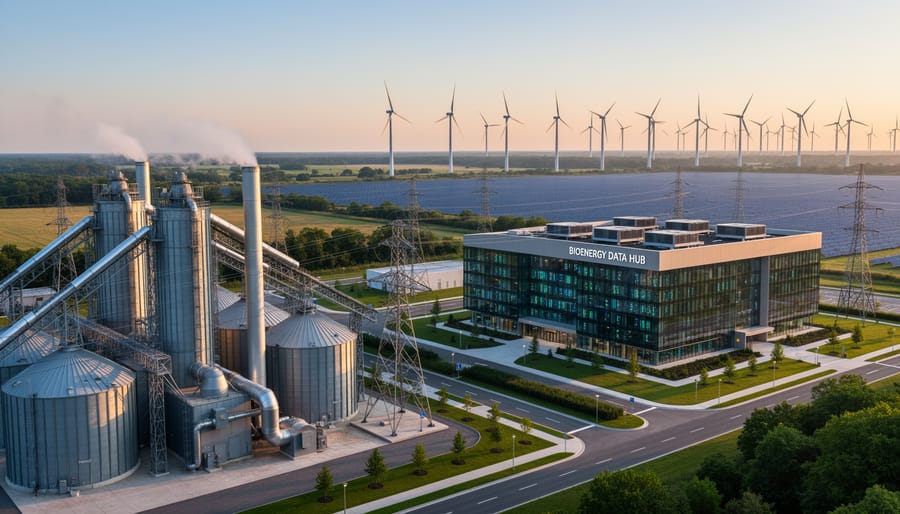
Online gaming platforms can’t afford downtime. When servers go dark, revenue stops instantly. Solar panels produce nothing at night, and wind turbines sit idle during still weather. This is why bioenergy offers distinct advantages for data centres powering casino platforms that need electricity flowing 24 hours a day, 365 days a year.
Bioenergy creates power by converting organic waste materials into electricity and heat. Agricultural residues, forestry by-products, food processing waste, and purpose-grown energy crops all become fuel sources that burn cleanly when managed properly. Unlike solar and wind, biomass facilities generate consistent baseload power regardless of weather or time of day. For gaming operators running server farms in Sydney, Melbourne, or Brisbane, this reliability matches their operational requirements perfectly.
Australia produces approximately 340 million tonnes of biomass annually, much of it currently wasted. Sugarcane bagasse from Queensland mills, wheat stubble from Victorian farms, sawmill residues from timber operations, and municipal organic waste from our cities all represent untapped energy potential. Converting even a fraction of these materials into electricity could power thousands of data centres while simultaneously solving disposal problems and reducing landfill methane emissions.
The carbon math works differently for bioenergy than fossil fuels. Plants absorb CO2 as they grow, then release it when burned for energy, creating a closed cycle rather than adding ancient carbon to the atmosphere. Modern biomass facilities capture particulates and other emissions with advanced filtration systems. When you account for life-cycle emissions from collection through combustion, well-designed bioenergy systems can achieve near carbon-neutral or even carbon-negative outcomes, especially when combined with carbon capture technology.
Several European data centres already run partly on biomass, demonstrating the model works at scale. In Australia, gaming platforms could partner with regional biomass producers to secure dedicated clean power supplies. A data centre in regional New South Wales might contract with local agricultural cooperatives to process crop waste into energy pellets, creating jobs in farming communities while powering digital entertainment for city dwellers.
The technical requirements align well too. Biomass plants can modulate output to match fluctuating demand, ramping up during peak gaming hours and scaling back during quieter periods. This flexibility complements solar and wind in hybrid renewable systems, filling gaps when other sources underperform. For gaming operators serious about eliminating their carbon footprint completely, bioenergy represents the missing piece that makes 100% renewable operation genuinely achievable rather than aspirational.
What Players Can Look for in Eco-Conscious Gaming Platforms

As Australian players become more environmentally aware, choosing gaming platforms that genuinely prioritize sustainability matters. The good news? You don’t need a degree in environmental science to spot the difference between authentic green commitments and empty marketing claims.
Start by examining what platforms actually disclose about their energy practices. Genuine eco-conscious operators don’t hide their environmental efforts in fine print, they showcase them. Look for platforms that publish annual sustainability reports, detail their energy sources, and provide measurable outcomes rather than vague promises about “going green.” Transparency signals accountability.
Here’s a practical checklist for evaluating whether a gaming platform walks the sustainability talk:
- Check for recognized environmental certifications like ISO 14001 or membership in industry sustainability initiatives, not just self-created badges.
- Look for specific renewable energy commitments, solar, wind, or bioenergy contracts with named providers rather than generic “renewable energy” claims.
- Find published data on carbon emissions, energy consumption per user, or power usage effectiveness (PUE) ratings for their data centres.
- Verify carbon offset programs through third-party registries where you can verify carbon claims and see actual project details.
- Review whether sustainability commitments include supply chain partners and payment processors, not just the platform’s direct operations.
- Assess update frequency, platforms sharing quarterly or annual progress reports demonstrate ongoing commitment versus one-off announcements.
Watch for red flags that suggest greenwashing. Platforms using nature imagery and green colour schemes without substantive environmental information aren’t making real commitments. Similarly, vague language like “eco-friendly” or “supporting the environment” without specifics means little. Carbon neutral claims deserve particular scrutiny, quality offsets that fund genuine emissions reduction projects differ vastly from cheap credits that accomplish nothing.
Australian operators partnering with local renewable energy providers deserve recognition. Platforms sourcing power from Australian solar farms, wind projects, or biomass facilities contribute directly to our domestic clean energy transition while reducing transmission losses from distant sources.
Your entertainment choices carry weight. When players prioritize platforms demonstrating genuine environmental responsibility, the entire industry takes notice.
The Broader Picture: Digital Entertainment’s Role in Australia’s Energy Transition
Australia’s online gaming sector doesn’t exist in isolation. It’s one thread in the vast digital tapestry that includes streaming services, cloud storage, social media platforms, and enterprise data centres, all consuming massive amounts of electricity around the clock. As we push toward ambitious renewable energy targets in 2026, the combined energy demands of these digital services represent both a challenge and an opportunity for our national transition.
The scale matters more than most Australians realize. Data centres across the country now consume approximately 3-5% of our total electricity supply, a figure projected to grow substantially as digital services expand. Online gaming platforms sit within this broader infrastructure, sharing server farms and cloud networks with streaming video, online banking, and countless other services Australians use daily.
What makes this moment pivotal is timing. Australia is investing heavily in renewable energy infrastructure, with solar and wind projects coming online at unprecedented rates. Our national grid is transforming faster than almost any developed economy. The digital entertainment sector, including online casinos, has a critical choice: lock in fossil fuel dependencies now through short-term planning, or integrate with clean energy systems as they scale up.
Several factors give digital entertainment an advantage in this transition. Unlike manufacturing or transport, data centres can be located strategically near renewable energy sources. They can implement load-shifting strategies, running intensive processes during peak solar production hours. Some facilities are experimenting with using excess renewable energy for computing tasks that aren’t time-sensitive, effectively acting as flexible load that helps stabilize the grid.
The gaming industry brings something else valuable to the table: a tech-savvy customer base that expects innovation. When streaming platforms announce carbon-neutral operations or cloud providers commit to 100% renewable energy, they set standards that ripple across digital entertainment. Online casinos responding to these expectations aren’t just following a trend; they’re participating in a fundamental shift in how Australia powers its digital economy.
This broader transformation matters because isolated efforts achieve less than coordinated action. When gaming platforms, streaming services, and cloud providers all prioritize renewable energy, they create sustained demand that justifies larger investments in clean energy infrastructure. They demonstrate that Australia’s digital future and environmental future can advance together, not in opposition.
The convergence of renewable energy and responsible online gaming represents more than just an environmental checkbox, it’s a blueprint for how Australia’s digital entertainment sector can thrive while honouring our commitment to a cleaner future. As we’ve explored throughout this article, the energy choices powering our favourite gaming platforms matter just as much as the platforms themselves.
Australia stands at a crossroads where our renewable energy leadership can extend beyond traditional industries into the digital realm. We’ve got the sun, the wind, and increasingly sophisticated bioenergy capabilities to power data centres that never sleep. The question isn’t whether clean energy can support online gaming, it’s how quickly we’ll make the transition.
For operators, the path forward is clear: environmental responsibility strengthens your brand, reduces costs, and aligns with what Australian players increasingly expect. The technology exists. The business case is proven. What’s needed now is commitment.
For players, your choices carry weight. Every time you choose a platform that’s transparent about its energy sources and sustainability commitments, you’re voting for an industry that takes its environmental obligations seriously. Entertainment and environmental stewardship aren’t competing values, they’re complementary ones that define modern responsibility.
The online gaming sector’s journey toward renewable energy mirrors Australia’s broader energy transition: ambitious, achievable, and essential. As more operators embrace clean power and more players demand it, we’re not just reducing carbon emissions, we’re proving that digital innovation and environmental care can advance together.
The future of responsible gaming is green. Australia has everything needed to lead the way.