
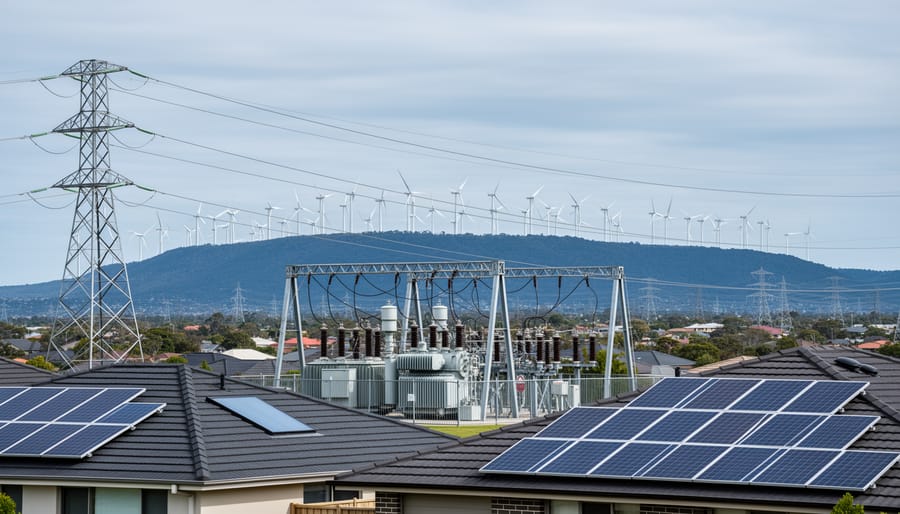
A grid innovation program is a government or industry-led initiative that funds and supports the integration of new technologies, infrastructure, and processes into electricity networks to make them smarter, more flexible, and capable of handling renewable energy sources like solar, wind, and bioenergy. These programs are transforming how Australia generates, stores, and distributes power, bridging the gap between our ageing grid infrastructure and the clean energy future we’re building.
Australia’s electricity grid was designed for one-way power flow from large coal and gas plants to homes and businesses. That model no longer fits our reality. With rooftop solar on more than three million Australian homes, utility-scale renewable projects coming online across regional areas, and battery storage becoming standard, our grid needs a complete rethink. Grid innovation programs tackle this challenge head-on, funding everything from community batteries and virtual power plants to smart meters and demand response systems that balance supply in real time.
These programs matter because they’re solving the single biggest obstacle to reaching 100% renewable energy: grid capacity and coordination. Without innovation in how we manage electricity networks, we can’t reliably integrate the massive wave of clean energy projects already under construction. Grid innovation programs are making it possible for farmers to export excess solar power, for communities to share energy storage, and for bioenergy facilities to feed waste-derived electricity back into the system when and where it’s needed most.
This article explains how grid innovation programs work, the different types available across Australia, and practical examples of projects already delivering results in communities and industries nationwide.
What a Grid Innovation Program Actually Means
A grid innovation program is a coordinated effort, typically led by government agencies, energy regulators, or electricity network operators, that funds, pilots, and rolls out new technologies designed to make our power grids smarter, more flexible, and capable of handling the clean energy mix Australia needs. Unlike traditional grid maintenance, which focuses on keeping existing infrastructure running, these programs actively seek out and trial emerging solutions that can transform how electricity is generated, transmitted, stored, and consumed across the network.
Think of conventional grid management as fixing the roads and keeping the traffic lights working. Grid innovation programs, by contrast, are about redesigning the entire transport system to accommodate electric vehicles, autonomous cars, and new traffic patterns we haven’t seen before. They develop and demonstrate smart grid technologies that can handle the variable nature of renewable energy, the sun doesn’t always shine, the wind doesn’t always blow, and biogas production fluctuates with feedstock availability.
These programs are essential because Australia’s electricity grid was built decades ago for a one-way flow from large coal and gas power stations to homes and businesses. The smart grid revolution requires two-way communication, rapid response to changing conditions, and the ability to coordinate thousands of small renewable generators rather than a handful of big ones.
- Distributed energy resources
- Small-scale power generation and storage systems (like rooftop solar, home batteries, or biomass generators) located close to where the energy is used, rather than centralized power stations.
- Grid stability
- The network’s ability to maintain consistent voltage and frequency despite fluctuations in supply and demand, which becomes more challenging with variable renewable sources.
- Demand response
- Programs that adjust electricity consumption patterns during peak times by incentivizing users to shift usage or reduce load, helping balance the grid without firing up fossil fuel backup generators.
- Virtual power plants
- Networks of distributed batteries, solar systems, and other energy assets coordinated by software to function as a single, flexible power source that can respond to grid needs in real time.
Grid innovation programs test these concepts in real communities with real energy users, measuring what works before committing to expensive nationwide rollouts. They’re the proving ground where renewable energy integration moves from theory to practice.
How Grid Innovation Programs Work in Practice
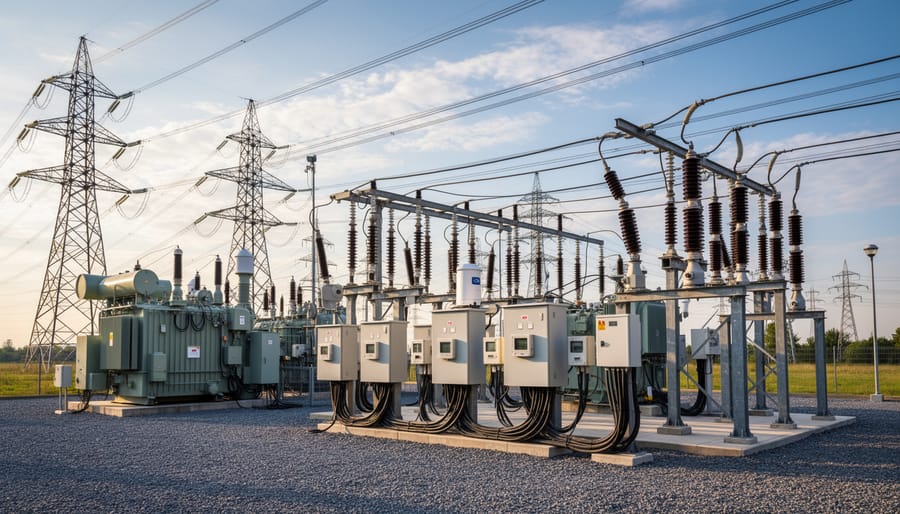
Grid innovation programs follow a structured yet collaborative process that turns cutting-edge energy ideas into working solutions on Australia’s electricity network. Understanding this process reveals why these programs succeed where traditional approaches often fall short.
The journey typically begins with problem identification. Energy providers and grid operators pinpoint specific challenges, whether that’s managing solar panel output fluctuations in a suburban neighbourhood, integrating a regional biomass facility, or preventing outages during extreme weather. They work with government agencies like the Australian Renewable Energy Agency (ARENA) to define what needs solving and how urgent the solution is.
Once challenges are clear, programs issue funding calls inviting technology companies, universities, and energy innovators to propose solutions. Applications undergo rigorous technical and commercial assessment. Successful projects receive grants or co-funding arrangements where government, industry partners, and sometimes the technology provider share costs and risks. This collaborative funding model means no single party carries the entire financial burden of unproven technology.
Selected projects enter real-world testing phases, which distinguishes grid innovation from laboratory research. A battery storage system might be installed in an actual substation serving thousands of homes. A demand response platform gets deployed across a regional community’s businesses and farms. These aren’t simulations, they’re live trials with real customers and actual grid conditions, including Australia’s temperature extremes and variable renewable generation patterns.
Throughout testing, programs collect extensive performance data: how well the technology handles peak demand, whether it improves voltage stability, what maintenance issues arise, and crucially, whether it delivers value compared to conventional solutions. Independent evaluators and research institutions analyse results, documenting both successes and failures transparently.
Successful technologies then move to scaling. Findings are shared across the energy sector through published reports and industry forums. Energy providers in other regions can adopt proven solutions with confidence, backed by Australian operating data rather than overseas case studies. Meanwhile, unsuccessful trials still generate valuable lessons that prevent others from repeating costly mistakes.
This systematic approach, identify, fund, test, measure, scale, transforms experimental concepts into reliable grid infrastructure. It’s why Australian communities now benefit from technologies that seemed speculative just five years ago, and why our grid can accommodate renewable energy sources that traditional infrastructure was never designed to handle.
Different Types of Grid Innovation Initiatives
Grid innovation programs come in several distinct forms, each designed to address different aspects of modernising Australia’s electricity infrastructure. Understanding these categories helps clarify how various initiatives work together to accelerate the clean energy transition.
Technology demonstration projects represent the most visible type of grid innovation program. These initiatives test cutting-edge hardware and software in real network conditions, everything from breakthrough solar inverter designs to advanced battery management systems. The Australian Renewable Energy Agency (ARENA) has funded dozens of such demonstrations, allowing energy companies to validate new solutions before committing to large-scale deployment. These projects typically run for twelve to thirty-six months and produce detailed performance data that informs future rollouts.
Community-scale trials take a different approach by implementing multiple technologies simultaneously in a defined geographic area. Rather than testing a single device, these programs create mini-laboratories where energy providers can observe how various innovations interact with each other and with actual consumer behaviour. Regional towns and outer metropolitan suburbs often host these trials, which might combine rooftop solar, community batteries, smart meters, and demand response systems in one coordinated experiment.
- Technology demonstrations, test specific new hardware or software solutions in operational grid environments to validate performance claims
- Community trials, deploy integrated systems across a neighbourhood or town to study real-world interactions and consumer response
- Regulatory sandboxes, allow energy companies to trial innovative concepts under relaxed rules without full compliance burden during testing phase
- Public-private partnerships, combine government funding with industry expertise and infrastructure to accelerate development timelines
- Research grants, support university and industry researchers investigating foundational technologies and grid management approaches
Regulatory sandboxes have emerged as particularly valuable for breaking through bureaucratic barriers. These programs let companies experiment with novel business models or technologies that don’t fit neatly into existing energy market rules, creating safe spaces for genuine innovation without compromising grid safety.
Public-private partnerships leverage strengths from both sectors: government provides funding certainty and policy support while industry contributes technical know-how and operational networks. Research grants round out the ecosystem by funding the fundamental science and early-stage concepts that eventually become tomorrow’s demonstration projects.
Real-World Applications Powering Australia’s Energy Transition
Bioenergy and Biomass Integration Projects
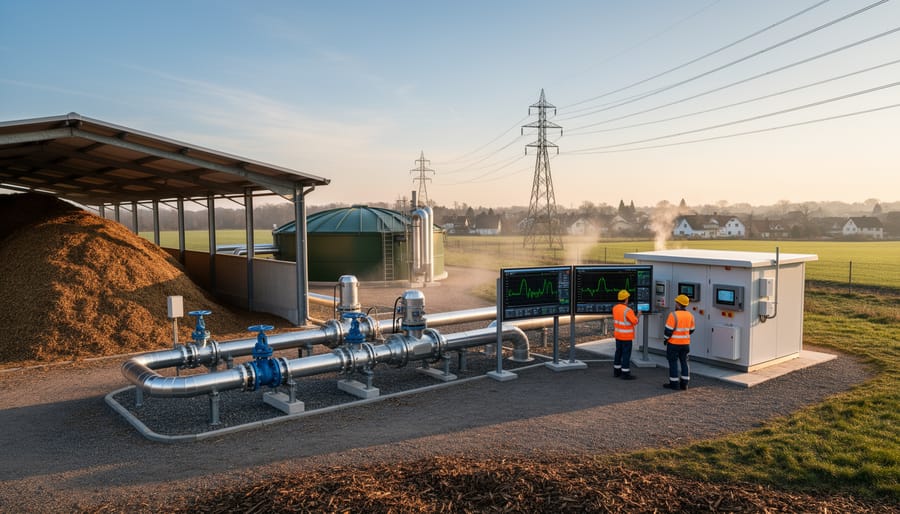
Grid innovation programs are unlocking practical pathways for biomass and biogas facilities to feed renewable power into Australia’s electricity network. In Queensland’s sugar-growing regions, trials funded through state innovation grants have connected bagasse-fuelled cogeneration plants to local distribution networks, stabilizing voltage fluctuations through real-time inverter controls and battery buffering systems. These projects demonstrate how agricultural waste streams can provide dispatchable baseload power while supporting grid reliability.
Western Australia’s Regional Energy Resources program has piloted biogas injection from livestock operations into isolated microgrids, pairing anaerobic digesters with advanced metering infrastructure that balances variable gas production against community demand. The technical breakthrough lies in smart control systems that synchronize biogas generators with solar arrays and battery storage, ensuring continuous supply even when individual sources fluctuate.
South Australia’s grid innovation schemes have tackled similar integration challenges alongside wind energy breakthroughs developing software platforms that forecast biomass availability based on harvest cycles and waste processing schedules. This predictive approach allows network operators to plan dispatch more effectively.
These trials prove that bioenergy can move beyond niche applications when grid modernization programs provide the technical scaffolding and funding certainty needed for commercial-scale rollout across regional Australia.
Community Energy Success Stories
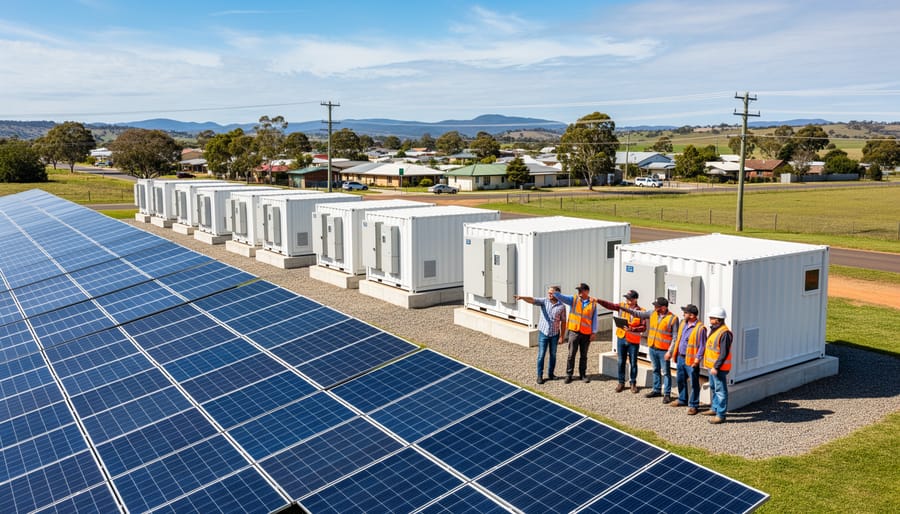
The remote township of Ravensthorpe in Western Australia transformed its energy outlook through a grid innovation trial that paired local solar generation with battery storage and demand management software. Before the project, residents endured frequent outages and paid premium rates for diesel-backed power. Within eighteen months of implementation, the community saw outage frequency drop by 67% while electricity costs fell roughly 15%, money that stays in local pockets rather than flowing to distant generators.
Up north, the Daintree region in Far North Queensland tackled its isolation from the main grid by piloting a microgrid powered primarily by locally-sourced biomass from timber mills and agricultural waste. The initiative created six full-time jobs at the biomass processing facility and another dozen part-time positions for collection and logistics. Residents report not just reliable power but pride in generating energy from resources that previously went to landfill.
In Tasmania’s King Island, a decade-long innovation program combining wind, solar, battery storage, and biodiesel has slashed diesel consumption by over 65%. The project attracted engineers and technicians who’ve settled with their families, reversing years of population decline. Local school enrollment has stabilized, and two new cafes opened to serve the expanded workforce.
These stories share a common thread: grid innovation programs don’t just deliver electrons, they revitalize communities, create meaningful work, and prove that Australia’s regional areas can lead the clean energy transition rather than merely follow it.
The Benefits Reshaping Australia’s Energy Landscape
Grid innovation programs are unlocking benefits that ripple far beyond simple infrastructure upgrades. These initiatives are fundamentally reshaping how Australia generates, distributes and consumes energy, creating opportunities that align environmental necessity with economic advantage.
The most immediate impact is accelerated renewable energy adoption. By solving technical barriers to grid connection and stability, these programs help solar farms, wind installations and bioenergy facilities come online faster. What previously took years of regulatory approvals and costly custom engineering solutions now happens through proven, tested pathways developed during innovation trials. This acceleration puts Australia on track to meet its 2030 emissions reduction targets while building energy security.
Carbon emissions reductions follow naturally. Every new renewable megawatt connected through innovation program pathways displaces fossil fuel generation. South Australia’s grid integration projects alone have contributed to the state now generating over 70% of its electricity from renewables in 2026, demonstrating how technical solutions translate directly to climate action.
Grid reliability has improved significantly. Advanced monitoring systems, smart inverters and battery storage tested through innovation programs help balance supply and demand minute-by-minute. Regional communities that once experienced frequent outages during storms or heatwaves now benefit from resilient microgrids that keep power flowing when centralized infrastructure fails. Some systems even enable solutions where your EV power your home during outages, adding another layer of energy independence.
Cost savings are materializing for consumers and businesses. Wholesale electricity prices stabilize when grids can efficiently absorb abundant renewable generation. Competition increases as smaller generators gain grid access. Remote communities replacing expensive diesel generation with local renewable microgrids see dramatic reductions in energy costs.
Regional employment has surged. Installation, maintenance and operation of new grid technologies create skilled jobs outside capital cities, keeping talent and investment in areas that need economic diversification. Australia’s clean energy sector now employs over 30,000 people, many in roles that didn’t exist five years ago.
Common Questions About Grid Innovation Programs
Who actually funds grid innovation programs in Australia?
Multiple sources provide funding, including the Australian Renewable Energy Agency (ARENA), state governments through their renewable energy targets, the Clean Energy Finance Corporation, and private energy companies investing in future infrastructure. Many programs combine public and private funding to share costs and accelerate deployment.
How can my community get involved or benefit from these programs?
Communities can participate by hosting trial projects, joining community energy groups that apply for grants, or partnering with energy providers testing new technologies. Even if you’re not directly hosting a trial, successful programs often get rolled out regionally, bringing improved reliability and lower costs to broader areas.
What technologies are being prioritized right now?
Current priorities include battery storage systems, smart inverters for solar integration, demand response technologies, microgrid controllers, and renewable hydrogen innovation for long-duration storage. Bioenergy integration receives strong attention, especially technologies that help biomass facilities provide stable baseload power to complement variable solar and wind.
How long before we see real results from these programs?
Pilot projects typically run for one to three years, with successful technologies often scaled up within five years. Some communities already experience benefits like improved power reliability and reduced outages during trials, while broader rollouts of proven solutions happen progressively across regions.
How do grid innovation programs specifically support bioenergy development?
These programs fund solutions to technical challenges that previously made bioenergy integration difficult, such as managing variable biomass supply, connecting remote facilities to the grid cost-effectively, and coordinating biogas generation with grid demand. They’ve enabled biomass power plants to provide flexible, dispatchable renewable energy that stabilizes grids increasingly reliant on intermittent sources.
Are there opportunities for businesses or farmers to participate?
Absolutely. Agricultural operations with biomass waste can partner with energy companies on biogas projects, landowners can host battery or microgrid infrastructure, and businesses can participate in demand response trials. Many programs actively seek diverse participants to test solutions across different settings and industries.
These programs represent a practical pathway for everyday Australians to engage with the energy transition. Whether you’re a farmer with crop residues, a community leader interested in local energy security, or simply a household wanting reliable renewable power, grid innovation initiatives create tangible opportunities to participate in and benefit from cleaner energy systems being built right now.
Grid innovation programs represent far more than technological upgrades to Australia’s electricity infrastructure. They’re creating pathways toward a cleaner, more reliable energy system that reduces carbon emissions while generating economic opportunities across regional communities. These initiatives prove that Australia can successfully integrate renewable energy sources at scale, transforming what once seemed like ambitious climate targets into achievable milestones.
The programs operating today are demonstrating practical solutions that benefit everyone. Farmers and landholders can now connect bioenergy facilities to grids that were designed decades ago for coal-fired power. Regional towns are gaining access to reliable electricity that doesn’t depend on distant transmission lines. Businesses are finding ways to reduce energy costs while shrinking their environmental footprint. Each successful trial builds confidence and creates blueprints for broader implementation.
Australia stands at a pivotal moment in its energy transition. Grid innovation programs are removing the technical barriers that once slowed renewable adoption, making it possible to power homes and industries with clean energy sources including bioenergy, solar, wind, and battery storage working together seamlessly.
For individuals and organizations committed to environmental sustainability, staying informed about grid innovation initiatives creates opportunities to participate, advocate, and benefit. Whether you represent a community exploring renewable options, a business seeking cleaner energy solutions, or simply someone passionate about Australia’s environmental future, these programs are shaping the energy landscape you’ll navigate tomorrow. The transformation is happening now, and the pathways forward have never been clearer.