
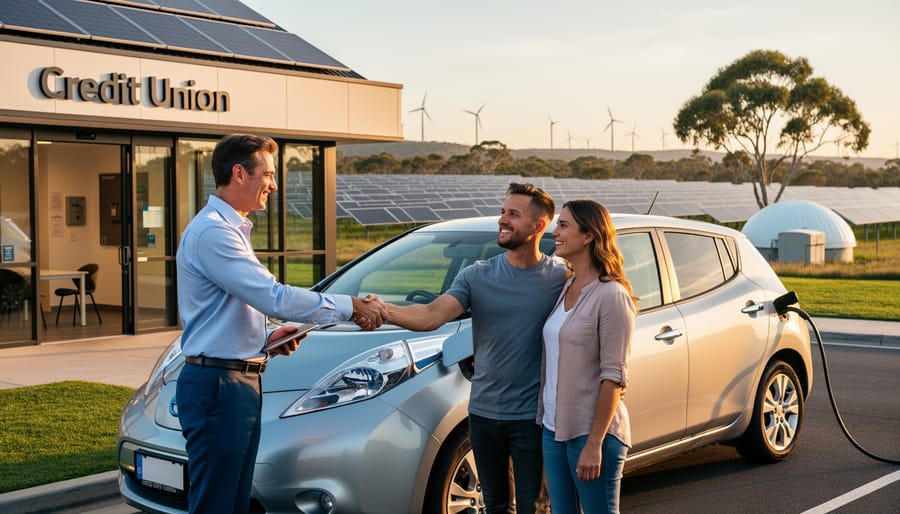
The financial system doesn’t have to work against the planet. Green credit unions are reshaping how Australians access funding for renewable energy projects, offering an alternative to traditional banks that often view solar installations, biogas systems, and community energy initiatives as too risky or too small to bother with.
These member-owned financial cooperatives operate on a simple principle: your money finances projects that align with environmental values while delivering competitive returns. Unlike conventional lenders focused solely on profit margins, green credit unions assess loan applications through a sustainability lens, recognizing that a household solar array or a farm-based bioenergy system represents both financial sense and climate action.
The connection to carbon credit markets makes this model even more compelling. When credit unions finance renewable energy projects that generate Australian Carbon Credit Units, they’re not just funding infrastructure—they’re enabling ongoing revenue streams that strengthen loan repayment capacity. A dairy farmer installing an anaerobic digester, for instance, gains both energy independence and tradable carbon credits, transforming what traditional banks see as experimental into what green credit unions recognize as financially robust.
Several Australian credit unions have already embraced this approach, offering specialized green loans with reduced rates for energy-efficient homes, electric vehicles, and renewable installations. They understand that backing a community solar project or a regional bioenergy hub isn’t charity—it’s smart lending that reduces long-term risk while building resilient local economies.
For Australians frustrated by mainstream banks’ sluggish response to climate urgency, green credit unions offer something tangible: a place where your savings actively accelerate the renewable transition, and where securing finance for your own sustainable energy project becomes genuinely achievable rather than aspirational.
What Makes a Credit Union ‘Green’?
The Values Behind Green Finance
At the heart of green credit unions lies a commitment to doing well by doing good. Unlike conventional financial institutions focused solely on profit margins, these member-owned cooperatives embrace a triple bottom line: people, planet, and prosperity. They’re part of Australia’s broader green finance revolution, prioritising community benefit alongside financial returns.
Environmental impact assessment sits at the core of their lending decisions. Before approving loans for solar installations, biomass heating systems, or energy efficiency upgrades, green credit unions evaluate the projected carbon reduction outcomes. This rigorous approach ensures every dollar lent actively contributes to Australia’s emissions reduction targets.
Transparency distinguishes these institutions from greenwashing pretenders. Members receive regular reports detailing the carbon footprint avoided through their collective investments, often measured in tonnes of CO2 prevented or renewable megawatt-hours generated. This accountability builds trust and demonstrates real environmental progress.
The Community Bank model in regional Victoria exemplifies these values beautifully. By financing local bioenergy projects and publishing quarterly sustainability reports, they’ve shown how financial services can strengthen communities while protecting the environment. It’s finance with a conscience, proving that ethical frameworks and sound business practices aren’t mutually exclusive.
Australian Green Credit Unions Leading the Charge
Across Australia, forward-thinking credit unions are proving that finance can be a powerful force for environmental good. These institutions aren’t just talking about sustainability—they’re actively funding the green transition.
Bank Australia stands out as a pioneer, having committed to never lending to fossil fuel industries while actively financing renewable energy projects nationwide. Their portfolio includes solar farms in regional Victoria and New South Wales, helping communities reduce reliance on coal-fired power while creating local jobs. Members report genuine pride knowing their savings directly support clean energy infrastructure.
Greater Bank has made significant strides in funding rooftop solar installations for households and small businesses along the NSW coast, making renewable energy accessible to everyday Aussies who might otherwise struggle with upfront costs. Their green loans feature competitive rates that recognise the long-term value of sustainable investments.
Beyond Energy Federal Credit Union has carved a niche financing bioenergy installations, including a notable project converting agricultural waste into electricity in Queensland. This innovative approach not only generates clean power but also solves waste management challenges for farming communities.
These credit unions have collectively funded community renewable initiatives worth millions, demonstrating that member-focused institutions can drive meaningful environmental change. Their success stories prove that aligning financial services with ecological responsibility isn’t just possible—it’s profitable and practical, creating a blueprint others can follow.
Bridging Carbon Credit Markets and Energy Projects
How Carbon Credits Lower Your Energy Loan Costs
Understanding how carbon credits translate into better loan terms is simpler than you might think. When a credit union finances renewable energy projects like solar farms, biogas plants, or wind installations, these projects generate tradable carbon credits by reducing greenhouse gas emissions. Each credit represents one tonne of carbon dioxide prevented from entering the atmosphere.
Here’s where it gets interesting for borrowers. These carbon credits provide additional revenue beyond the energy produced. Green credit unions factor this extra income stream directly into their lending assessments. Instead of evaluating a renewable energy project solely on electricity sales, they recognise the combined revenue from both energy generation and carbon credit sales.
This dual income approach significantly improves project viability. A solar installation that might seem marginally profitable becomes substantially more attractive when carbon credit revenue is included. Credit unions can then offer lower interest rates because the borrower has stronger cash flow to service the loan.
The benefits flow through to everyday Australians in practical ways. A farmer installing a biogas digester might secure a rate 1-2 percentage points lower than a traditional bank would offer. Over a twenty-year loan, that difference saves tens of thousands of dollars. Credit unions structure these arrangements by using carbon credit revenue as additional security, reducing their lending risk and passing those savings directly to members through reduced rates and fees.
Real Stories: Farms and Businesses Winning with Green Finance
Real change happens when vision meets opportunity, and across Australia, green credit unions are helping turn sustainable energy dreams into reality. Here are three businesses that successfully partnered with green-focused lenders to transform their operations.
Riverside Dairy Farm in Gippsland, Victoria, faced mounting electricity costs and wanted to reduce their carbon footprint. Traditional banks offered little interest in financing their proposed biogas digester system. Enter their local green credit union, which saw the project’s potential differently. The farm secured a $180,000 loan at competitive rates, installing a system that converts dairy waste into renewable energy. The game-changer? Revenue from carbon credits generated by methane reduction made their loan repayments manageable from day one. Two years on, the farm has slashed electricity bills by 60% and generates additional income selling excess power back to the grid.
Sunshine Coast Brewery in Queensland tells a similar story. Their vision for a 100kW solar installation seemed financially out of reach until a green credit union structured a loan that factored in both energy savings and carbon credit revenue. The brewery now operates on 85% renewable energy, with the carbon credits they earn effectively subsidising their repayments. As owner Michael Chen explains, “Our green lender understood that sustainability isn’t just good ethics, it’s good business. They looked at the whole picture, not just traditional metrics.”
Meanwhile, Thompson’s Organic Farm near Adelaide combined solar panels with battery storage through green financing. Their credit union worked closely with carbon credit advisors to maximise project returns, creating a financial model that traditional lenders had dismissed as too complex. Today, they’re energy independent and earning steady income from their renewable energy certificates.
These stories demonstrate that green credit unions don’t just lend money—they partner in building Australia’s sustainable future.
Financing Options for Your Renewable Energy Dreams
Home Energy Solutions
Green credit unions are making home energy upgrades remarkably accessible for everyday Australians through tailored financing solutions. Solar panel installations remain the most popular option, with typical loan amounts ranging from $5,000 to $30,000 and competitive interest rates often sitting between 4-7% over 5-10 year terms. Many institutions now bundle solar with battery storage systems, recognising that energy independence matters just as much as generation.
Beyond solar, forward-thinking credit unions are financing bioenergy heating systems like wood pellet boilers and heat pumps, particularly in cooler regions where heating costs traditionally soar during winter. These loans typically range from $8,000 to $25,000 with similar repayment flexibility.
Energy efficiency upgrades round out the offerings, covering everything from insulation and double-glazed windows to smart thermostats and heat recovery systems. Smaller loans starting at just $2,000 make these improvements achievable without breaking the bank.
What sets green credit unions apart is their willingness to consider the long-term savings these upgrades generate. Some even offer reduced rates when your project qualifies for government rebates or carbon credit schemes, creating a win-win scenario. Take the Thompson family from regional Victoria, who financed a complete solar and battery system through their local green credit union, cutting their energy bills by 80% while contributing clean power back to the grid.
Agricultural and Commercial Projects
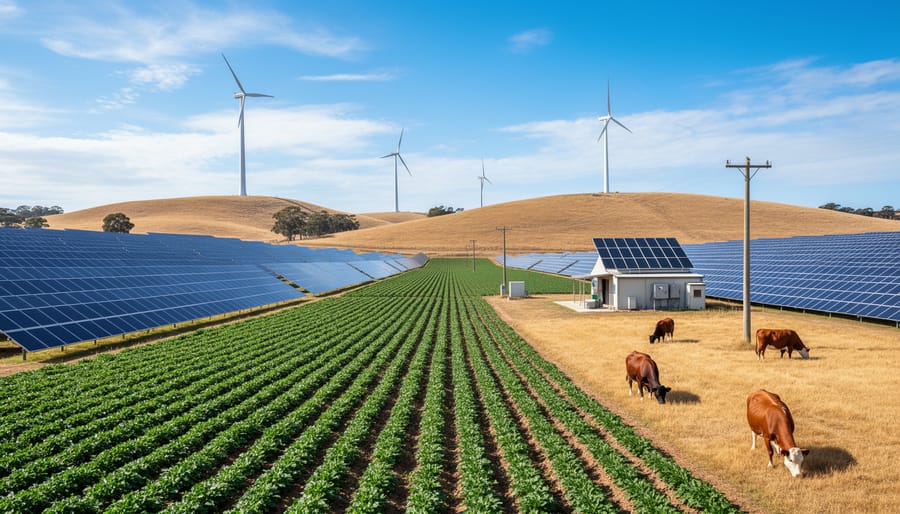
Green credit unions are stepping up to support Aussie farmers and businesses ready to make the leap to larger-scale renewable energy solutions. These specialised lenders understand that transitioning to comprehensive bioenergy systems requires substantial capital investment, and they’ve designed flexible financing packages specifically for commercial-scale projects.
For agricultural operations, this means access to funds for biomass digesters that convert livestock waste into electricity, solar-powered irrigation systems, and integrated renewable energy infrastructure that reduces operating costs while generating carbon credits. A grain farmer in regional Victoria recently secured financing through a green credit union for a 500-kilowatt biomass system that now powers their entire operation using crop residue, slashing energy bills by 70 percent.
Commercial enterprises are also benefiting, with green credit unions funding everything from warehouse solar installations to manufacturing facilities powered by organic waste. The real advantage lies in the lender’s understanding of carbon credit revenue streams, which strengthens loan applications and can even offset repayment costs. These institutions recognise that sustainable energy investments aren’t just environmentally responsible, they’re financially savvy decisions that create long-term value for Australian businesses.
The Ripple Effect: Beyond Just Clean Energy
Creating Local Green Jobs
When green credit unions back renewable energy projects, they’re doing more than just funding infrastructure—they’re creating genuine employment opportunities right here in regional Australia. Every solar farm, biomass facility, or wind project requires skilled workers for installation, ongoing maintenance, and technical support. The beauty of green finance is that these jobs can’t be outsourced; they’re rooted in local communities where the projects exist.
Take the example of a biomass energy plant in rural Queensland, financed through cooperative green lending. The project created dozens of positions ranging from equipment operators to engineers, with many workers receiving on-the-job training in renewable technologies. Local tradies found new opportunities in installation work, while others gained expertise in bioenergy production—skills that will remain valuable for decades.
Beyond direct employment, these projects stimulate broader economic activity. Suppliers, logistics providers, and service businesses all benefit when sustainable infrastructure arrives in town. Green credit unions often prioritise projects that maximise community benefit, meaning they’re actively looking for ventures that create lasting regional employment rather than just quick returns. This approach transforms environmental investment into economic development, proving that going green doesn’t mean sacrificing jobs—it means creating better, future-focused careers close to home.
Building Energy-Independent Communities
Across Australia, green credit unions are helping energy-independent communities take control of their power future. In regional Queensland, a farming cooperative secured affordable loans through their local green credit union to install a shared solar array and battery storage system. The result? Five properties now generate 90% of their electricity needs while selling excess power back to the grid, dramatically reducing operating costs.
Down in Tasmania’s Huon Valley, a similar story unfolded when a community credit union financed rooftop solar installations for 32 homes simultaneously. By pooling resources and negotiating bulk pricing, residents slashed their energy bills by an average of 65%. The credit union structured repayments so monthly savings exceeded loan costs from day one.
Remote communities benefit particularly well from this model. A Torres Strait island township recently achieved near-complete energy independence through credit union-backed solar and biomass systems, eliminating reliance on expensive diesel generators. These examples demonstrate how accessible finance transforms renewable energy from aspiration to reality, proving that energy security and financial sustainability go hand in hand.
Getting Started: Your Path to Green Financing
What You Need to Qualify
Getting started with a green credit union is refreshingly straightforward, though requirements vary between institutions. Generally, you’ll need to become a member first, which typically involves opening a basic account with a small deposit, often as little as $20 to $50. Membership is usually open to residents within specific regions or communities, though some green credit unions have broader eligibility across Australia.
When applying for green financing, you’ll need the usual documentation: proof of identity, income statements, and details about your proposed project. What sets green credit unions apart is their focus on environmental impact. They’ll want to understand how your project contributes to sustainability, whether you’re installing solar panels, upgrading to energy-efficient equipment, or implementing a bioenergy system.
Project criteria typically include clear environmental benefits, realistic implementation plans, and demonstrated commitment to sustainable practices. Many credit unions prioritise projects that generate renewable energy certificates or carbon credits, as these provide additional security for the loan. A solar farm operator in regional New South Wales secured financing after showing their project would reduce carbon emissions by 500 tonnes annually whilst creating local employment opportunities. The good news? Green credit unions actively want to support sustainable projects, making them genuine partners in your environmental journey rather than just lenders.
Making Your Application Stand Out
Preparing a compelling application for green credit union financing starts with clearly demonstrating your project’s environmental credentials. Document your expected carbon reduction outcomes with solid estimates—whether you’re installing solar panels on your community centre or developing a bioenergy system for your farm. Most green credit unions appreciate straightforward calculations showing tonnes of CO2 avoided annually.
Show them you’ve done your homework. Include quotes from reputable installers, energy audits, and realistic financial projections. If your project can generate Australian Carbon Credit Units through the Emissions Reduction Fund, outline this potential revenue stream. Many successful applicants have strengthened their cases by partnering with experienced renewable energy consultants who can validate technical claims.
Tell your story authentically. A Queensland farmer recently secured funding by explaining how his waste-to-energy system would not only power his operations but also reduce methane emissions from agricultural waste. Green credit unions respond to projects that demonstrate genuine commitment to sustainability alongside financial viability.
Finally, prepare a clear repayment plan that accounts for energy savings and any carbon credit income. This dual revenue approach reassures lenders while showcasing the innovative thinking that sets successful green projects apart from conventional loan applications.
Green credit unions are reshaping Australia’s renewable energy landscape by putting sustainable financing within reach of everyday Australians. Unlike traditional banks that may view small-scale solar installations or community bioenergy projects as too modest for their portfolios, these member-focused institutions understand that real change happens when individuals and local organisations can access affordable funding for their green ambitions.
The beauty of green credit unions lies in their dual role: they’re not just lenders, they’re enablers bridging the gap between abstract carbon markets and tangible environmental action. When your solar panels generate credits that offset emissions elsewhere, or when your business invests in biomass heating that reduces carbon footprints, green credit unions help translate these environmental wins into financial benefits that make projects viable from day one.
We’ve seen how Australian farmers transformed agricultural waste into revenue streams, how coastal communities embraced solar independence, and how small businesses slashed energy costs whilst contributing to national emissions targets. These aren’t isolated success stories; they’re proof that sustainable finance works when it’s designed around people rather than profit margins alone.
The pathway forward is clear and more accessible than many Australians realise. Whether you’re considering rooftop solar for your home, exploring bioenergy options for your farm, or planning a community renewable project, green credit unions offer the financial partnership that makes these aspirations achievable. Start by researching member-owned institutions in your region, speak with their green finance specialists, and discover how your renewable energy goals align with available funding options. The future of sustainable energy isn’t just about technology; it’s about democratising access to the finance that makes it possible for everyone.