
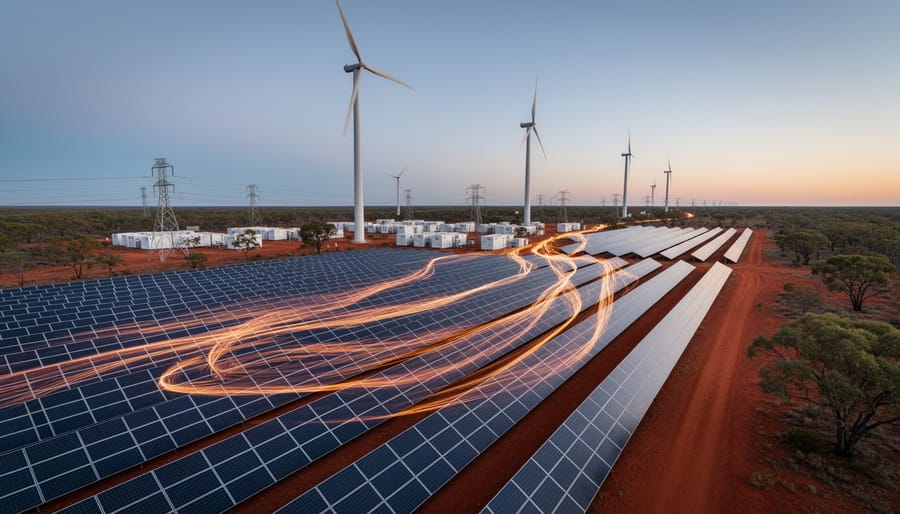
Australia’s energy landscape is being transformed not by guesswork, but by gigabytes. Data-driven energy represents the convergence of renewable technology with advanced analytics, artificial intelligence, and real-time monitoring systems that are making clean energy more reliable, affordable, and accessible than ever before. Smart sensors on wind turbines predict maintenance needs before failures occur. Machine learning algorithms optimize solar farm output by anticipating weather patterns hours in advance. Grid management systems balance supply and demand across thousands of distributed energy sources simultaneously, ensuring stability while maximizing renewable integration.
This technological revolution is already delivering tangible results across the country. From Queensland’s sugarcane mills using predictive analytics to optimize biomass combustion efficiency, to South Australian battery systems that respond to grid fluctuations in milliseconds, data is proving to be as valuable as the energy itself. Through digital collaboration platforms, energy producers, distributors, and consumers now share information instantaneously, creating an interconnected ecosystem that learns and improves continuously.
The impact extends beyond technical performance. Data-driven approaches are reducing energy costs for households and businesses, creating new employment opportunities in analytics and technology sectors, and accelerating Australia’s pathway to net-zero emissions. For organizations considering renewable energy investments, data provides the confidence that comes from measurable outcomes rather than theoretical projections. What was once an industry guided primarily by engineering intuition now operates with surgical precision, making every kilowatt count.
The question facing Australian businesses and communities today is not whether to embrace data-driven energy, but how quickly they can harness its potential to gain competitive advantage while contributing to a cleaner future.
What Data-Driven Energy Actually Means for Everyday Australians
Data-driven energy is transforming how Australians interact with power every single day, though you mightn’t even realize it’s happening. At its heart, it’s about using sensors, smart meters, artificial intelligence, and predictive modeling to make our energy systems work smarter, not harder. Think of it as giving our electricity network a brain that learns, adapts, and makes decisions in real-time.
For everyday households, this means your smart meter isn’t just recording how much power you use—it’s feeding valuable information into systems that help energy providers predict demand, prevent blackouts, and optimize when renewable energy flows into the grid. When your solar panels generate excess electricity on a sunny afternoon, smart grid technology can intelligently distribute that power where it’s needed most, potentially earning you better feed-in tariff rates.
The benefits hit your hip pocket directly. Smart home energy management systems now learn your habits and automatically adjust heating, cooling, and appliance use to capitalize on off-peak rates. Some Australian families are saving hundreds of dollars annually simply by letting data-driven systems optimize their energy consumption patterns without sacrificing comfort.
In rural Australia, the impact is equally impressive. Agricultural operations are using data analytics to optimize biomass energy production from crop waste. Sensors monitor moisture levels, energy content, and processing efficiency in real-time, ensuring farmers extract maximum value from materials that would otherwise be burned or left to decompose. One sugarcane grower in Queensland discovered through data analysis that adjusting their bagasse processing schedule increased energy output by 18 percent while reducing waste.
This technology also means more reliable power. Predictive modeling can forecast equipment failures before they happen, alerting maintenance teams to fix problems before you experience an outage. The result is fewer blackouts, reduced energy waste, and a grid that seamlessly integrates renewable sources like wind, solar, and bioenergy. Data-driven energy isn’t just a technical upgrade—it’s the foundation for a cleaner, more affordable energy future that benefits every Australian.

The Missing Piece in Australia’s Renewable Puzzle
Australia’s renewable energy transformation is gathering momentum, with solar and wind leading the charge. Yet there’s a challenge that doesn’t make headlines but threatens to undermine our entire transition: we’re generating clean energy without the intelligence systems to manage it effectively. It’s like building a state-of-the-art kitchen but forgetting the recipe book.
Consider this scenario playing out across regional Australia right now. A sugar mill in Far North Queensland processes tonnes of bagasse daily, a biomass resource perfect for energy generation. Meanwhile, a grain processing facility three hours south struggles with energy costs during peak demand. Both operate independently, missing opportunities that data intelligence could unlock. This disconnection represents billions of dollars in untapped potential and unnecessary carbon emissions.
The renewable puzzle isn’t just about generating more clean energy; it’s about generating the right amount at the right time, in the right place. This is where data becomes the missing piece. Unlike fossil fuel power stations that can ramp up production predictably, bioenergy and other renewables face unique complexities. Biomass availability fluctuates with harvest seasons. Processing facilities operate on varied schedules. Energy demand swings wildly between industrial peaks and quiet weekends.
Data intelligence bridges these gaps in ways that were impossible just five years ago. Smart sensors now track moisture content in agricultural waste, determining optimal collection times before materials degrade. Predictive algorithms forecast equipment maintenance needs, preventing costly breakdowns that once halted operations for weeks. Machine learning systems analyse weather patterns, crop yields, and industrial schedules simultaneously, matching biomass supply with energy demand across entire regions.
Perhaps most critically, data helps solve the coordination problem. Australia’s geography means renewable resources are often far from where energy is needed most. Advanced data platforms now map biomass availability across vast agricultural regions, calculate transport logistics, and optimize processing schedules. What once required dozens of phone calls and spreadsheets now happens in real-time through integrated systems.
This intelligence layer transforms bioenergy from a promising concept into a reliable, scalable solution. It’s the difference between hoping renewables work and knowing they will. For Australia to achieve its ambitious renewable targets, we need more than good intentions and impressive infrastructure. We need the data systems that make everything work together seamlessly, turning isolated green initiatives into a coordinated clean energy ecosystem.
Success Stories: Australian Collaborations Getting Results
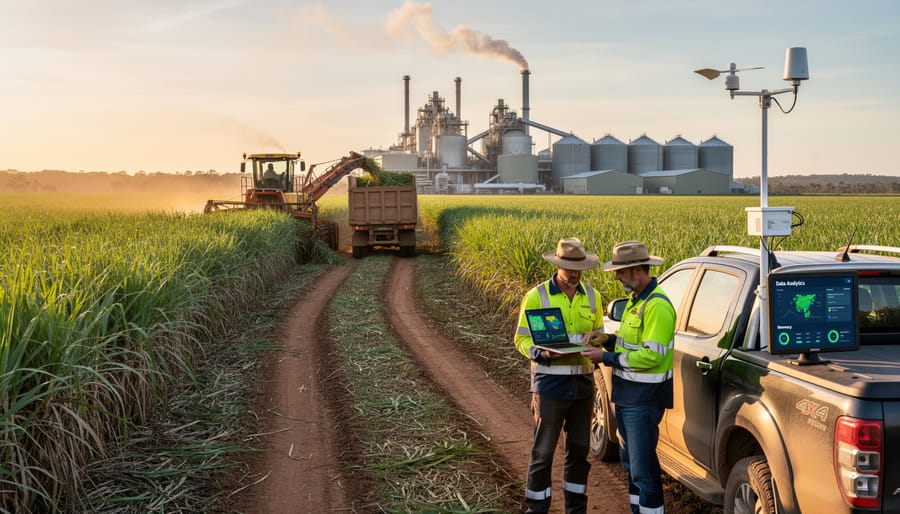
Queensland’s Smart Sugarcane Transformation
In Queensland’s sun-drenched canefields, a quiet revolution is underway that’s transforming how we think about renewable energy. Sugarcane farmers across the state are partnering with data scientists and energy distributors to squeeze every last drop of value from their crops – not just in sugar, but in clean, reliable electricity.
The secret lies in bagasse, the fibrous residue left after crushing sugarcane. Mills have burned this material for decades, but now sophisticated data analytics are helping them optimize the process like never before. By monitoring everything from crop moisture content to harvesting schedules and mill processing efficiency, farmers can predict and maximize their bagasse energy output with remarkable precision.
Take the collaboration between Mackay Sugar and local data analytics firms. Using real-time sensors and predictive modeling, they’ve increased their renewable energy generation by 18 percent while simultaneously improving sugar yields. The data helps farmers determine the optimal harvest timing – when cane delivers maximum sugar content alongside ideal fiber composition for energy production. It’s a win-win that seemed impossible just a few years ago.
Energy distributors are now in the mix too, using this predictive data to better integrate bagasse-generated electricity into the grid. They can anticipate when mills will be producing surplus power and adjust distribution accordingly, making the entire system more efficient and reliable.
This three-way partnership between growers, tech experts, and power companies showcases something special about Australia’s approach to renewable energy. It’s not just about installing solar panels or wind turbines – it’s about using smart technology to unlock potential that’s been sitting in our backyards all along. These farmers are proving that with the right data and collaboration, agricultural waste becomes a powerhouse of possibility.
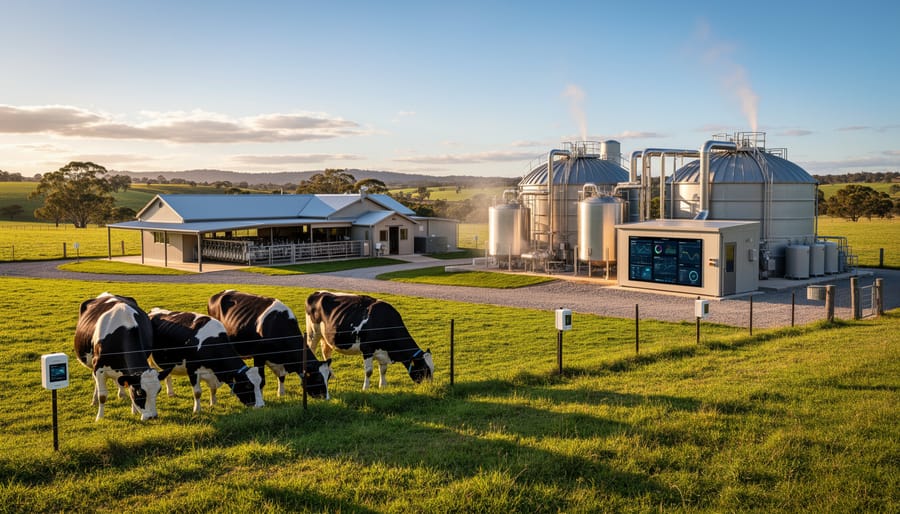
Victoria’s Dairy Waste-to-Energy Network
Across Victoria’s dairy heartland, an innovative network is transforming what was once considered problematic farm waste into a valuable energy resource. The Victoria’s Dairy Waste-to-Energy Network brings together over thirty dairy farms, using cutting-edge sensors and predictive algorithms to convert manure into reliable biogas that powers farms and feeds into the local grid.
The system works through smart monitoring technology installed across participating properties. Sensors track everything from waste volume and composition to temperature and moisture levels in anaerobic digesters, the large tanks where organic matter breaks down to produce methane-rich biogas. This real-time data flows into sophisticated algorithms that predict optimal feeding schedules and processing conditions, maximising biogas production while maintaining system stability.
What makes this collaboration particularly impressive is its dual environmental benefit. By capturing methane that would otherwise escape into the atmosphere from manure storage, the network significantly reduces greenhouse gas emissions. Methane is roughly 25 times more potent than carbon dioxide as a warming gas, so keeping it contained makes a genuine difference. At the same time, the captured gas becomes clean energy, displacing fossil fuel consumption.
For participating farmers, the financial upside has been considerable. Revenue from electricity sales and renewable energy certificates helps offset operational costs, while the nutrient-rich digestate left after biogas extraction makes excellent organic fertiliser, reducing chemical fertiliser expenses.
The network’s success demonstrates how data-driven energy solutions can address multiple challenges simultaneously. By connecting individual farms through shared technology platforms and coordinated energy management, this Victorian initiative proves that agricultural communities can become powerful contributors to Australia’s renewable energy future while building more sustainable, profitable farming operations.
How Data Makes Bioenergy More Competitive
Data isn’t just transforming how bioenergy works—it’s fundamentally changing the economics that determine whether bioenergy can truly compete in today’s energy market. When you consider that traditional fossil fuels have benefited from over a century of optimization, bioenergy needs every possible advantage to level the playing field. That’s exactly what data-driven approaches are delivering.
One of the biggest cost drains in bioenergy has always been logistics. Moving organic waste from farms, food processors, and municipal collections to bioenergy facilities requires careful coordination. Smart logistics systems now use real-time data to optimize collection routes, reduce fuel consumption, and ensure trucks arrive at facilities when they’re ready to process materials. Some Australian operations have cut transport costs by up to 25 percent simply by letting data direct their movements rather than relying on fixed schedules.
Inside bioenergy facilities, data analytics are squeezing more energy from every tonne of feedstock. Sensors monitor temperature, pressure, and chemical conditions during conversion processes like anaerobic digestion or gasification. This constant monitoring allows operators to fine-tune conditions on the fly, boosting conversion efficiency by 10 to 15 percent in many cases. When you’re processing thousands of tonnes annually, these percentage gains translate to substantial revenue increases.
Feedstock management represents another area where data delivers competitive advantage. Advanced systems can predict the energy potential of different organic materials before they enter the facility, allowing operators to blend feedstock types for optimal output. This prevents the costly mistake of processing low-quality materials that don’t justify the energy investment.
Perhaps most importantly, predictive maintenance powered by data analytics dramatically reduces downtime. Equipment failures in bioenergy facilities can mean days or weeks of lost production. By analyzing equipment performance patterns, operators can schedule maintenance before breakdowns occur, keeping facilities running smoothly and reliably. This operational consistency builds confidence among investors and energy buyers, making bioenergy projects more financially viable and attractive in Australia’s competitive renewable energy landscape.
The Collaboration Advantage: Why Partnerships Matter
The energy transition isn’t something any single player can achieve alone—it’s fundamentally a team sport. When it comes to data-driven energy solutions, the magic happens at the intersection where different expertise meets and information flows freely between partners.
Think of it like assembling a puzzle. Farmers bring intimate knowledge of biomass production cycles, soil conditions, and crop yields that no algorithm could replicate without their input. Energy companies contribute established infrastructure, distribution networks, and technical know-how about grid integration. Tech firms deliver the sophisticated analytics platforms that transform raw numbers into actionable insights. Meanwhile, academic-industry partnerships drive innovation through cutting-edge research, testing new approaches that push boundaries. Governments round out the picture by creating enabling policy frameworks and standardising data protocols.
The real breakthrough comes from shared data. When a Queensland sugarcane grower shares harvest timing data with an energy producer, who combines it with weather predictions from meteorologists and demand forecasts from grid operators, suddenly everyone can plan more efficiently. The farmer optimises planting schedules, the energy company reduces storage costs, and consumers enjoy more reliable supply.
Consider this practical example: Western Australian wheat farmers partnering with biogas facilities found that sharing real-time data about crop residue availability reduced collection costs by thirty percent whilst increasing energy output reliability. The farmers gained additional income streams, the energy companies secured consistent feedstock, and the region reduced waste going to landfill.
This collaborative approach transforms isolated data points into powerful networks of intelligence. Each partner strengthens the others, creating outcomes impossible to achieve independently. The transition to renewable energy demands this interconnected thinking—because sustainable solutions require sustainable partnerships.
Getting Involved: Opportunities for Aussies and Organizations
Whether you’re running a household, managing a farm, or overseeing business operations, there are practical ways to get involved in Australia’s data-driven energy transformation right now.
For households, the journey often starts with understanding your energy consumption patterns. Installing a smart meter gives you real-time insights into when and how you’re using electricity, helping you shift high-energy activities to off-peak times when renewable generation is strongest. Many Australians are taking things further by joining community energy programs, where collective data helps optimize local solar, battery storage, and biomass systems. These initiatives not only reduce bills but connect neighbours in meaningful ways around shared energy goals.
Agricultural operations have unique opportunities through biomass data partnerships. If you’re producing organic waste from cropping, livestock, or food processing, sharing data about waste volumes, composition, and seasonal patterns can help bioenergy developers design efficient collection and conversion systems. Several state government programs now facilitate these connections, turning what was once a disposal challenge into a revenue stream while supporting regional energy independence.
Businesses of all sizes can tap into industrial energy efficiency programs that use data analytics to identify savings opportunities. Energy audits combined with ongoing monitoring reveal patterns you might never spot manually, from inefficient equipment to process bottlenecks that waste power.
Ready to take the next step? Start by contacting your state’s Clean Energy Council representative or regional sustainability network. Many local councils also coordinate energy transition working groups that welcome new participants. The Australian Renewable Energy Agency website lists current collaborative projects seeking partners, while industry associations in agriculture and manufacturing regularly host workshops on data-driven energy solutions. The key is simply reaching out—the collaborative nature of this movement means someone’s already eager to help you get started.
Australia’s renewable energy future isn’t just bright—it’s already being built, right now, through data-driven collaborations that are transforming how we power our homes, businesses, and communities. These aren’t far-off concepts or distant possibilities. They’re practical solutions creating real jobs in regional towns, reducing emissions across our energy grid, and building the energy independence that strengthens our nation’s resilience.
From South Australian wind farms sharing grid data to optimize output, to Victorian biogas facilities converting waste into power, to Queensland communities accessing smart energy platforms—these success stories demonstrate that the transition is well underway. The beauty of data-driven energy is that it makes renewables more reliable, more efficient, and more accessible for everyone.
But we need your involvement to accelerate this transformation. Whether you’re a homeowner curious about solar and storage options, a business leader exploring sustainable energy solutions, or a community advocate, there’s a role for you. Start by learning more about renewable technologies in your area. Consider joining local energy initiatives or cooperatives. Advocate for policies that support clean energy innovation and fair grid access.
The path forward requires continued collaboration between government, industry, researchers, and everyday Australians. Together, we’re not just adapting to change—we’re leading it. Australia has the natural resources, the technical expertise, and increasingly, the data infrastructure to become a genuine renewable energy powerhouse on the global stage. That future starts with the choices we make today, and the exciting news is that those choices have never been clearer or more achievable.