
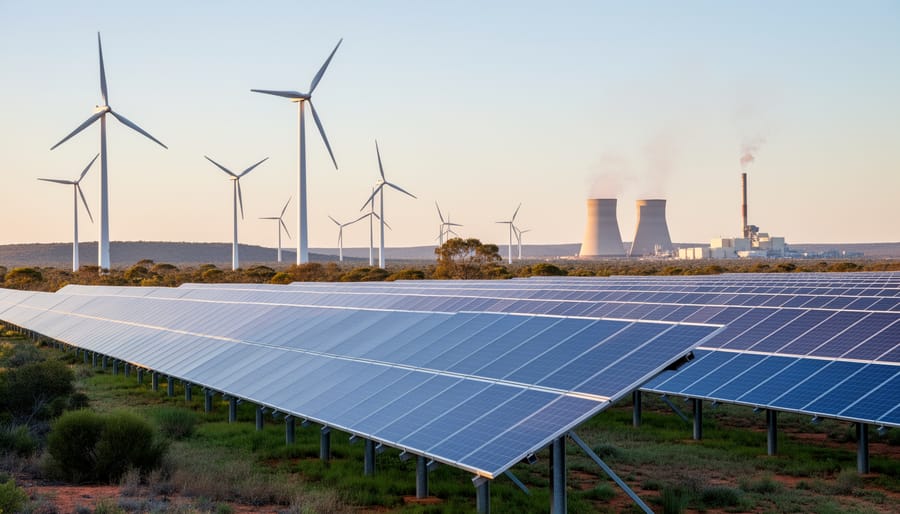
All renewable energy is sustainable in theory, but not all sustainable energy comes from renewable sources. The distinction matters because Australia’s energy financing mechanisms, including the government’s Contracts for Difference scheme launching later in 2026, will prioritise projects based on how they meet sustainability criteria, not just whether they tap renewable resources.
Understanding this difference shapes everything from investment decisions to project eligibility for public support. Renewable energy refers specifically to power generated from naturally replenishing sources like solar, wind, and hydro. Sustainable energy casts a wider net, encompassing any energy system that meets present needs without compromising future generations, including nuclear power, highly efficient natural gas with carbon capture, and even some bioenergy applications that carefully balance land use and emissions.
For Australian households, businesses, and policymakers navigating 2026’s energy landscape, this distinction has real financial consequences. A solar farm qualifies as both renewable and sustainable. A biomass plant burning forestry waste might be renewable but unsustainable if it depletes native forests faster than they regenerate. Meanwhile, a next-generation nuclear facility could be sustainable without being renewable.
The rise of smart contracts and transparent financing mechanisms means projects now face scrutiny on multiple sustainability dimensions: carbon intensity, resource depletion, ecosystem impact, and long-term viability. Success stories across Australia demonstrate that the most bankable projects excel in both categories, combining renewable inputs with genuinely sustainable practices that consider water use, biodiversity, and community benefit alongside clean electricity generation.
At a Glance: Sustainable vs. Renewable Energy
Here’s a practical breakdown to help you understand the critical differences between sustainable and renewable energy at a glance:
| Aspect | Renewable Energy | Sustainable Energy |
|---|---|---|
| Definition | Energy from sources that naturally replenish (solar, wind, hydro) | Energy that meets present needs without compromising future generations |
| Scope | Focuses on resource regeneration during operation | Considers full lifecycle: extraction, manufacturing, use, disposal |
| Environmental Impact | Low emissions during generation | Minimal harm across entire supply chain and ecosystem |
| Examples | Solar panels, wind turbines, hydroelectric dams, biomass | Solar with ethical mining and recycling, community wind projects, low-impact hydro |
| Long-Term Viability | Resource availability guaranteed | Resource availability plus social equity, biodiversity protection, and community benefit |
The key insight: all sustainable energy is renewable, but not all renewable energy qualifies as sustainable. A solar farm powered by panels manufactured with unethical mining practices is renewable but not fully sustainable. Understanding this distinction helps investors and policymakers choose projects that genuinely protect Australia’s environmental future while accelerating the clean energy transition.
What Each Option Is
Renewable Energy Explained
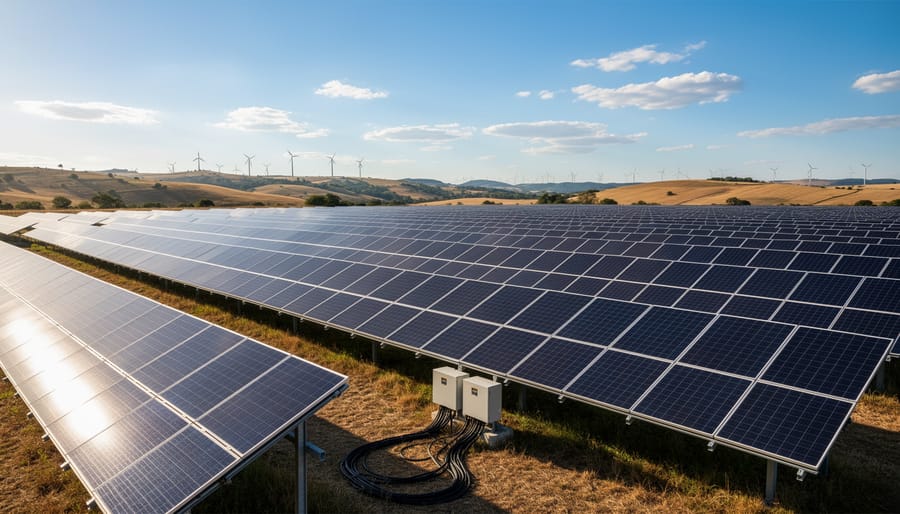
Renewable energy draws on sources that replenish themselves naturally within human timescales. Solar panels capture sunlight that reaches Earth every day. Wind turbines harness moving air that never runs out. Hydroelectric dams use water flowing through rivers in continuous cycles. These sources contrast sharply with fossil fuels, which take millions of years to form and deplete with extraction.
The defining characteristic is resource availability, not environmental performance. Geothermal systems tap heat from Earth’s core that regenerates faster than we can use it. Biomass burns organic matter that regrows through agriculture or forestry. Each qualifies as renewable because the energy source itself won’t disappear through human use.
This distinction matters because not every renewable option delivers equal environmental outcomes. Large-scale hydroelectric projects flood ecosystems and displace communities, even though flowing water remains inexhaustible. Biomass from cleared native forests destroys carbon stores that took centuries to build, despite new trees eventually growing back. First-generation biofuels compete with food crops for agricultural land, creating social and environmental tensions that the “renewable” label alone doesn’t capture.
Australia’s energy transition relies heavily on solar and wind, which align well with both renewable and sustainable criteria when properly sited. Yet the renewable classification tells you only that the fuel source won’t run dry. Understanding what makes energy truly sustainable requires examining the broader lifecycle impacts, community effects, and long-term environmental health that the next section explores.
Sustainable Energy Explained
Sustainable energy represents the gold standard in clean power generation. It goes beyond simply using resources that replenish naturally. Sustainable energy meets today’s power needs while ensuring future generations inherit a healthy planet and equitable access to energy resources.
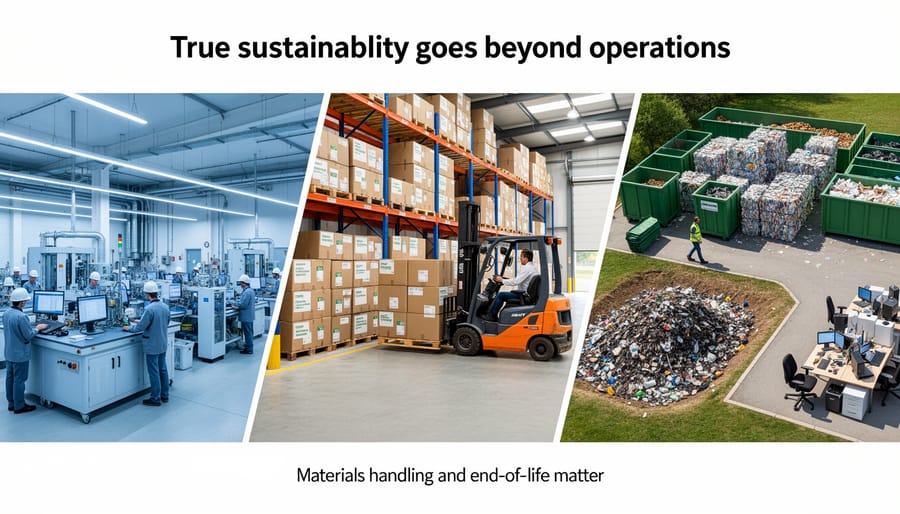
This broader definition considers the full lifecycle of energy production. When we evaluate sustainability, we examine how materials are extracted, how equipment is manufactured, what happens during operation, and how components are disposed of or recycled at the end of their useful life. A solar farm might generate clean electricity, but its sustainability depends on whether the panel production involved ethical mining practices, low-emission manufacturing, and robust recycling programs.
Sustainable energy also weighs social dimensions that renewable energy classifications often overlook. Does the project create meaningful local employment? Have Traditional Owners been genuinely consulted and fairly compensated? Does the energy benefit the surrounding community, or does it extract value while leaving residents with visual impacts and no economic participation?
Long-term environmental health factors heavily into sustainability assessments. This means considering water usage in drought-prone regions, impacts on biodiversity corridors, soil degradation from large installations, and cumulative effects on ecosystems. A bioenergy project fuelled by native forest logging may technically be renewable, but it fails the sustainability test if it depletes old-growth habitats faster than they regenerate.
The key insight: all genuinely sustainable energy is renewable, but the reverse isn’t automatically true. Sustainability adds layers of environmental stewardship, social responsibility, and intergenerational fairness that transform renewable energy from a technical classification into a holistic solution.
Key Differences That Matter for Energy Investment
Environmental Impact Across the Lifecycle
The terms “renewable” and “sustainable” often blur together in energy discussions, but their environmental footprints diverge when you examine the full lifecycle. Renewable energy focuses narrowly on the generation phase, whether the fuel source replenishes naturally. Sustainable energy widens the lens to every stage: resource extraction, manufacturing, transport, operation, and end-of-life disposal.
Take solar panels as a case study. During operation, they generate electricity without emissions, making them unequivocally renewable. Yet their sustainability depends on upstream and downstream choices. Mining lithium, cobalt, and rare earth minerals for photovoltaic cells can degrade ecosystems, contaminate water supplies, and displace communities if extraction standards are weak. Manufacturing processes in regions reliant on coal-fired grids embed carbon into every panel before it ever reaches an Australian rooftop.
The disposal phase matters just as much. Without robust recycling infrastructure, decommissioned panels become e-waste, toxic materials leaching into landfill. Australia’s renewables plus storage push through the CIS offers a chance to fund projects that close the loop: developers using certified low-emission manufacturing, partnering with Indigenous mining operations adhering to land-care protocols, and committing to panel take-back schemes.
A renewable project becomes sustainable when it accounts for cradle-to-grave impacts. Investors evaluating lifecycle emissions, water footprints, and circular economy plans aren’t just ticking boxes, they’re future-proofing assets against regulatory shifts and community expectations.
Resource Availability and Long-Term Viability
While both renewable and sustainable energy rely on naturally replenishing sources, the sustainable lens examines whether those sources can genuinely meet our needs indefinitely without creating new environmental problems. It’s the difference between asking “will this resource renew?” and “can we use this resource responsibly over the long term?”
Resource competition presents a critical distinction. A renewable energy source might regenerate quickly, but if harvesting it competes with food production, water supply, or ecosystem health, it fails the sustainability test. Consider bioenergy: burning native forest timber for electricity is technically renewable, trees regrow, but it degrades biodiversity, releases stored carbon, and removes habitat that took decades or centuries to develop. By contrast, bioenergy from agricultural waste, sawmill residues, or purpose-grown crops on marginal land meets present energy needs without compromising future generations’ options.
Water usage reveals similar tensions. Hydroelectric dams generate renewable power, yet some configurations disrupt river ecosystems, reduce downstream water availability, and affect communities dependent on those waterways. Sustainable approaches prioritize run-of-river hydro systems or pumped storage that minimizes ecological disruption while still harnessing water’s energy potential.
Land degradation matters too. Large-scale monoculture energy crops can deplete soil nutrients and increase erosion, even though the biomass itself renews annually. Sustainable energy projects integrate land stewardship, rotating crops, maintaining soil health, preserving native vegetation corridors, ensuring the land remains productive for energy and other uses across generations.
Australia’s Capacity Investment Scheme recognizes these nuances by supporting projects that deliver both renewable generation and long-term environmental resilience, helping investors choose pathways that truly endure.
Social and Economic Considerations
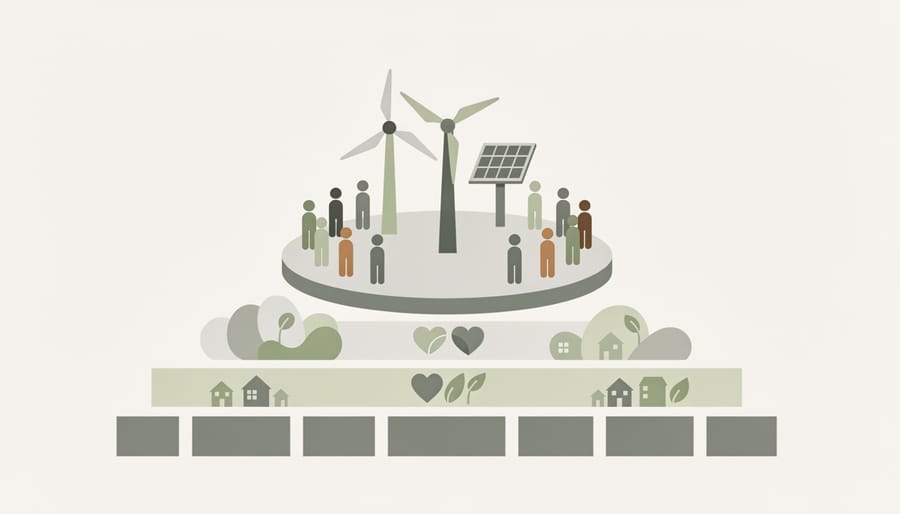
Renewable energy projects generate power cleanly, but sustainable energy demands more: genuine benefit for the people whose land, water and communities host the infrastructure. Social sustainability considers whether projects create local jobs that outlast construction, respect Indigenous land rights and cultural heritage, provide affordable energy access to nearby communities rather than just exporting profits, and build lasting partnerships instead of parachuting in with a done deal.
A renewable solar farm can tick every technical box yet leave a community worse off if workers come from interstate, electricity prices stay high for locals, or sacred sites get bulldozed without consultation. Conversely, well-designed community-powered projects embed equity from the start: training locals for ongoing operations roles, sharing revenue through community trusts, partnering with Traditional Owners on site selection, and ensuring the energy generated actually reduces bills for those who host the project.
Australian success stories show what’s possible. Several regional wind and solar developments now include Indigenous equity stakes, apprenticeship programs tied to local secondary schools, and revenue-sharing agreements that fund community infrastructure. These projects prove sustainable energy isn’t just about kilowatt-hours, it’s about who benefits, who decides, and whether the transition leaves everyone better off.
Carbon Emissions and Climate Impact
Renewable energy sources like solar and wind generate electricity with near-zero emissions during operation, which makes them powerful climate solutions. But sustainable energy assessment digs deeper. It tracks the full carbon footprint, from mining rare earth minerals for turbines and panels, through manufacturing and transport, to eventual decommissioning and recycling. A solar farm might operate emissions-free for decades, yet its embodied carbon from production can take years to offset.
This is where carbon payback period matters. Well-designed renewable projects in sunny or windy Australian locations typically recoup their embodied emissions within two to four years, then deliver clean power for 20-plus years. Poorly sited projects or those with inefficient supply chains extend that payback, reducing their climate benefit. Sustainable energy standards require transparent lifecycle emissions accounting and prioritize projects with the shortest payback and lowest total footprint.
Australia’s Capacity Investment Scheme strengthens this climate focus by providing long-term revenue certainty for projects that genuinely reduce emissions. The CIS accelerates investment in both renewable generation and clean dispatchable capacity like battery storage, aiming to deliver an additional 40 gigawatts by 2030 and reach 82% renewable electricity on the grid. By underwriting revenue and reducing financial risk, the scheme channels capital toward verified low-carbon solutions that consider full lifecycle impacts, not just operational emissions.
How Contracts for Difference Support Sustainable Energy Financing
Australia’s Capacity Investment Scheme demonstrates how well-designed Contracts for Difference can unlock capital for sustainable energy while protecting investors from market volatility. The CIS provides a long-term revenue safety net that decreases financial risk for investors, making it easier to secure financing for projects that might otherwise struggle to attract backing. This government revenue underwriting scheme specifically targets both renewable energy generation, such as wind and solar, and clean dispatchable capacity, such as battery storage, recognizing that a truly sustainable grid needs both intermittent renewables and reliable storage to maintain stability.
The CfD payment mechanism works both ways. Under a Contract for Difference, the plant operator receives subsidies when market conditions result in particularly low revenue, ensuring the project remains financially viable even during prolonged periods of low wholesale electricity prices. Conversely, the plant operator must also repay funds when high electricity prices lead to particularly high revenue. This two-way arrangement, often called a symmetric market premium, prevents excessive profits while guaranteeing baseline returns. The result is predictable cash flows that lenders love and a fairer distribution of market risks between operators and the public.
This revenue certainty matters enormously for sustainable energy projects, which often carry higher upfront costs than conventional generation. Battery storage systems, for instance, face significant capital expenditure but provide essential grid stability services. By guaranteeing long-term revenue streams, the CIS makes these projects bankable. Investors can model returns with confidence, developers can secure debt financing at lower interest rates, and the broader energy transition accelerates. The scheme works alongside other financing tools like sustainability-linked bonds to create a comprehensive support framework for Australia’s shift toward genuinely sustainable energy generation.
The CIS stands apart from simple subsidies because it aligns private incentives with public goals. Operators still have every reason to maximize efficiency and minimize costs, but they’re protected from the extreme price swings that make renewable energy projects risky bets. This balanced approach has proven effective at attracting institutional investors who need stable, long-term returns to meet their obligations to pensioners and policyholders. By reducing uncertainty, Contracts for Difference transform sustainable energy from a speculative venture into a viable infrastructure investment.
Who Should Choose Which: Matching Energy Strategy to Goals
For Investors and Project Developers
Investors and project developers face a strategic choice shaped by timeline pressures and stakeholder expectations. Renewable energy projects offer faster pathways to revenue, particularly for established technologies like wind and solar farms. These projects benefit from streamlined approval processes, mature supply chains, and bankable performance data that accelerates financial close. When speed to market drives your business case, securing grid connection rights before competitors, capturing time-limited incentives, or meeting corporate renewable energy targets with tight deadlines, renewable projects deliver proven returns quickly.
Sustainable energy projects demand deeper due diligence but build lasting value. They require lifecycle assessments of supply chain emissions, community consultation processes, and biodiversity impact studies that extend development timelines. However, this front-loaded work creates competitive advantages: stronger social license to operate, resilience against future regulatory tightening, and alignment with institutional investors’ evolving ESG mandates. Companies announcing net-zero commitments increasingly scrutinize embodied carbon and community outcomes, not just operational renewables.
The Capacity Investment Scheme substantially reduces financial risk for both approaches. By providing revenue certainty through two-way payments, subsidies during low-price periods and repayments during high-price periods, the CIS makes both renewable and sustainable projects more bankable. This mechanism complements Power Purchase Agreements that lock in offtake arrangements, creating layered revenue protection that attracts institutional capital to projects with longer sustainability assessment processes alongside faster renewable builds.
For Communities and Industry
Community energy projects and industrial energy users face different decision points than large-scale investors. For communities developing local energy infrastructure, full sustainability often outweighs pure renewable capacity. A community solar farm that creates local jobs, respects Indigenous land management practices, and includes shared ownership delivers long-term social capital alongside clean electricity. Similarly, regional microgrids powered by local agricultural waste build resilience while keeping economic benefits within the community. These projects prioritize lifecycle impacts and equitable access over maximum generation.
The Eden Magnet in Victoria demonstrates this approach. This community-owned renewable energy initiative combines solar generation with local economic development, ensuring residents benefit directly from energy production through shared returns and reduced power costs. The project prioritized community control and local employment over simply maximizing renewable capacity.
For industrial energy users, the calculation shifts. Manufacturing facilities needing reliable baseload power may choose proven renewable technologies with established supply chains first, then layer in sustainability criteria for future expansions. A regional food processor might install rooftop solar immediately for cost savings, then invest in sustainable biomass systems using processing waste once the economic case strengthens. The renewable-first approach delivers faster emissions reductions, while the sustainability lens guides longer-term infrastructure decisions that embed circular economy principles and community partnerships into operations.
Common Questions About Sustainable and Renewable Energy
Is all renewable energy sustainable?
No. While all sustainable energy is renewable, not all renewable energy meets sustainability criteria. A project might use an infinitely replenishing resource like solar or wind but still cause environmental harm through extraction of raw materials, damage to ecosystems during construction, or lack of end-of-life recycling plans.
Can fossil fuels ever be sustainable?
No. Fossil fuels are neither renewable nor sustainable because they take millions of years to form and release carbon that has been stored underground, disrupting the climate. Even with carbon capture technology, extraction depletes finite resources and creates environmental damage incompatible with sustainability principles.
What makes bioenergy sustainable versus just renewable?
Sustainable bioenergy uses waste products or purpose-grown crops on degraded land without competing with food production or destroying native ecosystems. It becomes unsustainable when it requires clearing forests, depleting soil, consuming excessive water, or harming biodiversity, even though the biomass itself is technically renewable.
How does Australia’s Capacity Investment Scheme ensure projects are sustainable?
The CIS supports renewable generation and clean dispatchable capacity, helping build a balanced grid that reduces reliance on fossil fuels. While it accelerates investment in renewable energy and storage, the scheme primarily targets emissions reduction rather than enforcing broader sustainability criteria like lifecycle impacts or community benefits.
When evaluating energy projects in Australia’s rapidly evolving landscape, ask whether developers have considered the full lifecycle: where materials come from, how construction affects local ecosystems and communities, what happens to equipment at end-of-life, and whether the project genuinely reduces emissions when you account for manufacturing and transport. Projects backed by mechanisms like the CIS offer revenue certainty, but sustainability requires looking beyond financial structure to environmental and social outcomes. The best projects tick both boxes, genuinely renewable resources managed in ways that protect the environment and benefit communities for generations.
Understanding the difference between renewable and sustainable energy isn’t just an academic exercise, it’s fundamental to shaping Australia’s energy future. Renewable energy gives us the clean generation capacity we desperately need, but sustainable energy ensures we’re building that capacity in ways that truly benefit communities and protect the environment for decades to come.
The distinction matters profoundly for everyone involved in energy decisions. Investors gain clarity on which projects offer genuine long-term resilience alongside financial returns. Policymakers can craft regulations that support not just clean energy, but equitable, enduring solutions. Communities can advocate for projects that deliver local benefits without hidden environmental or social costs.
Australia’s Capacity Investment Scheme represents a significant step forward, providing the revenue certainty that makes sustainable energy projects financially viable while targeting 40 gigawatts of new capacity by 2030. This mechanism, combined with growing awareness across the energy sector, is channeling investment toward projects that meet both renewable and sustainable criteria, proving that we don’t have to choose between speed and responsibility.
As you evaluate energy choices, whether you’re developing projects, investing capital, or advocating for community energy, apply both lenses. Ask if a project is renewable, yes, but also whether it’s truly sustainable across its entire lifecycle. That dual perspective will guide Australia toward an energy system that powers prosperity while safeguarding the environment for the generations who’ll inherit it.