
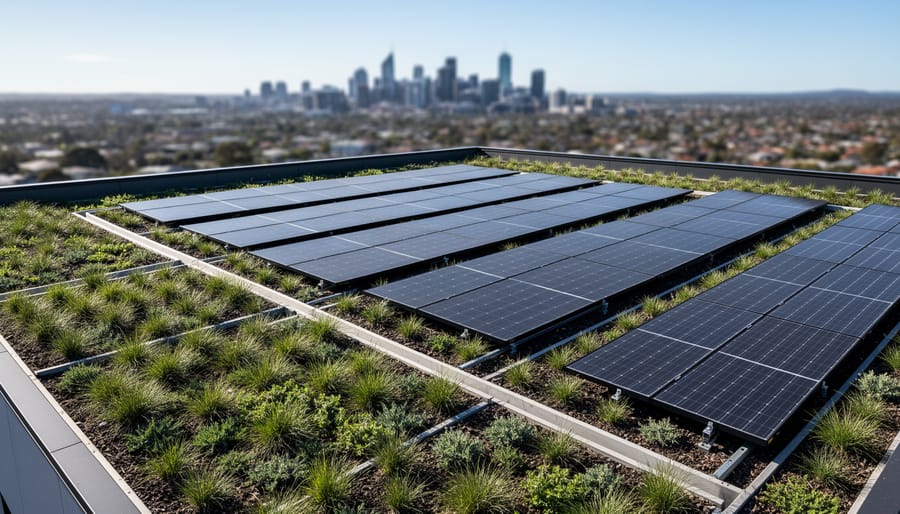
An eco hybrid roof is a dual-purpose rooftop system that combines vegetation, such as native plants or grasses, with integrated solar panels to generate renewable energy while managing stormwater, reducing building temperatures, and supporting urban biodiversity. Think of it as a green roof and solar energy system working in tandem rather than competing for the same space.
Australia’s climate makes this technology particularly compelling. With intense UV exposure across most of the continent and increasing pressure on urban water infrastructure, eco hybrid roofs address multiple challenges at once. The vegetation layer cools the building naturally, which can cut air conditioning costs by up to 25% during peak summer months, while the solar panels capture energy more efficiently thanks to the cooler microclimate the plants create beneath them. It’s a rare example of two sustainability solutions amplifying each other’s performance.
This article explains exactly how eco hybrid roofs function, breaks down the core components you’ll encounter in any Australian installation, and walks through real-world applications from commercial buildings in Sydney to community centres in regional Queensland. You’ll also find practical guidance on installation requirements, ongoing maintenance expectations, and answers to the questions most Australians ask before committing to the technology.
Whether you’re a property developer exploring sustainable building options, a homeowner curious about long-term savings, or a council officer evaluating infrastructure upgrades, understanding how these systems work and where they deliver the greatest value will help you decide if an eco hybrid roof suits your project. The technology is proven, the benefits are measurable, and Australian conditions are ideal for making it work.
What an Eco Hybrid Roof Means for Your Building
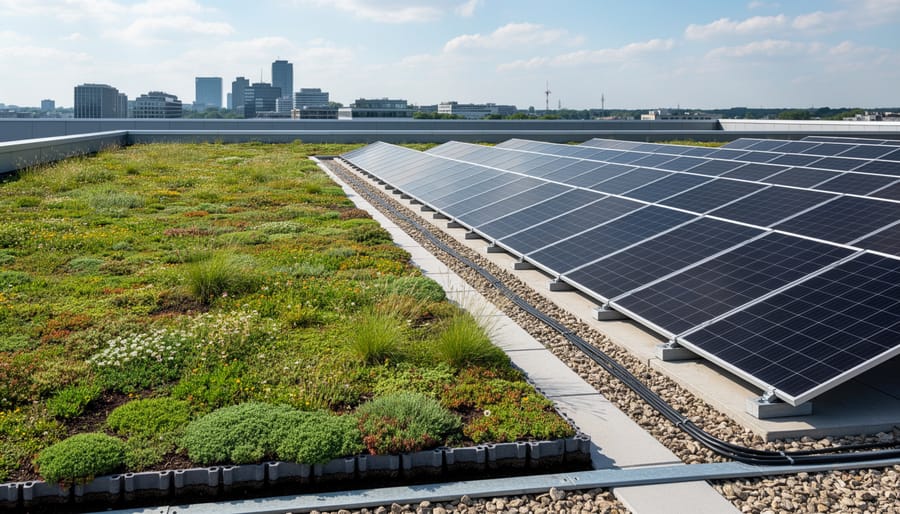
An eco hybrid roof transforms your building’s top surface from a static barrier into a working system that generates clean energy, cools itself, and supports living vegetation, all at once. It merges two proven technologies, green roofing and solar panels, into a single integrated platform that tackles multiple environmental and economic challenges facing Australian property owners.
The “eco” reflects the environmental payoff: living plants absorb rainwater, provide habitat for birds and insects, and cool the air around your building through natural evapotranspiration. Research from UNSW confirms that green roofs save energy by reducing heat transfer through the roof surface, which means less demand on air conditioning during Australia’s brutal summer months. The “hybrid” part signals the fusion of systems: photovoltaic panels sit above or alongside the vegetation, harvesting sunlight for electricity while the plants beneath keep the roof cooler and more efficient.
Here’s what those terms mean in practice:
- Eco hybrid roof
- A roofing system that layers solar energy generation, living vegetation, and passive climate control into one multi-functional structure.
- Green roof layer
- The combination of waterproof membrane, drainage material, growing medium, and selected plants that reduce heat, manage stormwater, and support biodiversity.
- Integrated solar photovoltaic (PV)
- Solar panels mounted on or above the green roof, designed to coexist with vegetation while capturing sunlight for on-site power generation.
- Passive thermal regulation
- Natural cooling and insulation provided by the plant layer and substrate, which moderates indoor temperatures without mechanical systems.
- Stormwater retention
- The green roof’s ability to absorb and slowly release rainwater, reducing runoff and lowering flood risk during heavy downpours.
This dual-purpose design matters in Australia because our climate swings between scorching heat and sudden storms, our cities are expanding into heat islands, and national carbon reduction targets push us toward smarter building practices. An eco hybrid roof addresses all three pressures without requiring you to choose between renewables and resilience, or between energy generation and the kind of underground heat management strategies that keep buildings comfortable year-round.
How Eco Hybrid Roofs Work
The Role of Vegetation and Solar Panels Together
The vegetation layer on an eco hybrid roof does more than look appealing, it actively cools the roof surface through evapotranspiration, the process by which plants release moisture and lower ambient temperature. This cooling effect creates a direct advantage for the solar panels mounted above or alongside the greenery. Standard roofs in Australian summers can exceed 65°C, which degrades solar panel output; panels lose roughly 0.5% efficiency for every degree above 25°C. By contrast, a vegetated roof typically runs 10-20°C cooler, and research confirms that cooler air boosts solar efficiency by keeping the photovoltaic cells within their optimal operating range. Installers arrange panels on raised frames or ballasted mounts to avoid shading the plants beneath, ensuring both systems receive the sunlight they need. The spacing also allows airflow around the panels, further enhancing the cooling benefit. These design tweaks mean solar panel advances and green-roof biology reinforce each other rather than compete, delivering measurable gains in energy yield and plant health without compromise.
Managing Water and Energy in One System
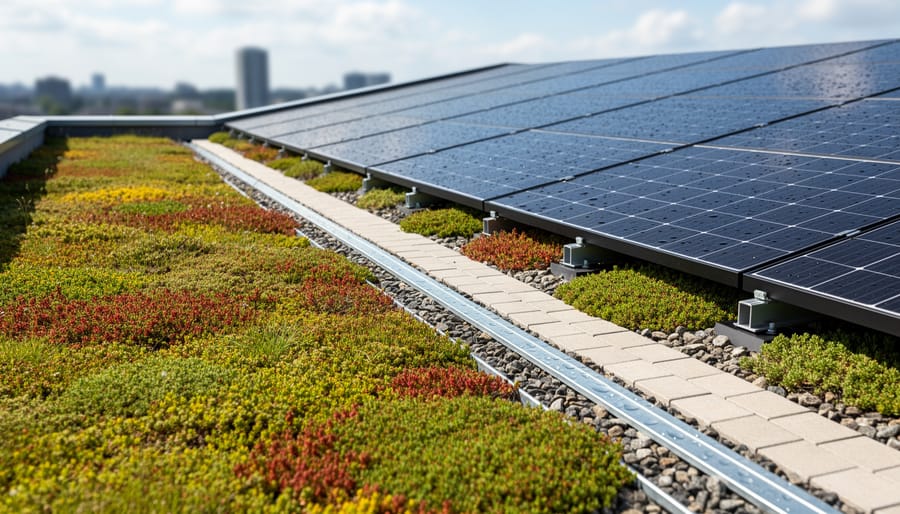
The vegetation layer acts as a living sponge, capturing rainfall and holding it in the soil and plant roots before it ever reaches the stormwater system. In a typical Sydney downpour, an eco hybrid roof can retain 50 to 80 per cent of the water that falls on it, releasing the rest slowly over hours or days rather than flooding drains all at once. This natural filtration means less strain on municipal infrastructure and fewer pollutants washing into rivers and harbours, a major advantage in coastal cities where green roofs manage flood runoff during storm events.
The retained moisture also keeps plants healthy during dry spells, reducing the need for supplementary irrigation. As the vegetation transpires, it cools the roof surface, which in turn helps solar panels operate more efficiently by preventing heat buildup. You get cleaner energy generation and better water management from the same footprint, no compromise, just complementary systems working together.
Components and Configurations of Eco Hybrid Roofs
Eco hybrid roofs aren’t one-size-fits-all systems. The configuration you choose depends on your building’s structural capacity, your budget, the local climate, and what you want to achieve, whether that’s maximum energy output, lush greenery, or a haven for local wildlife.
The most common setup in Australia is the extensive green roof with solar panels. This lightweight option uses a shallow growing medium (typically 80-150mm deep) planted with hardy, low-maintenance species like sedums, native grasses, or succulents that can handle drought and heat. The plants form a thin, resilient carpet that cools the roof surface, while solar panels are mounted on raised frames above the vegetation. Because the soil layer is thin and the plants are small, the additional structural load is minimal, often just 60-150kg per square metre when saturated, making this configuration suitable for most existing commercial and residential buildings without major reinforcement. It’s ideal for Sydney, Melbourne, and Brisbane’s urban environments where space is limited but energy savings and heat reduction are priorities.
Intensive green roofs with solar take the concept further. These systems use deeper soil (200mm or more), allowing for a wider variety of plants including shrubs, grasses, and even small trees. The result is a rooftop that functions almost like a garden or park, providing significant biodiversity benefits, better insulation, and more effective stormwater management. However, the added weight (150-500kg per square metre) means they’re only viable on buildings with strong structural support, typically new-build commercial properties or retrofitted industrial warehouses. In Perth and Adelaide, where water scarcity is a concern, intensive systems can incorporate native species that thrive on minimal irrigation while still supporting solar energy generation.
Biosolar roofs represent a more specialised configuration, designed explicitly to support pollinators and urban biodiversity alongside energy production. These systems use varied substrate depths, include flowering native plants, and often incorporate features like insect hotels or nesting boxes. Solar panels are spaced to allow sunlight to reach the vegetation below, and plant selection prioritises species that attract bees, butterflies, and birds. Common configurations include:
- Extensive biosolar (shallow substrate with pollinator-friendly groundcovers and solar panels)
- Intensive biosolar (deeper soil with diverse native planting and integrated solar arrays)
- Modular tray systems (pre-planted trays for easy installation and maintenance)
- Custom-planted systems (site-specific design for local flora and fauna)
- Solar-only zones with green perimeters (panels concentrated in high-sun areas, vegetation around edges)
Each configuration balances energy output, ecological function, and structural feasibility. Coastal Queensland buildings might opt for salt-tolerant native species and corrosion-resistant solar mounts, while Canberra installations may prioritise cold-hardy plants and insulation for winter heating benefits. The key is matching the system to your building’s capabilities and your region’s climate, ensuring both the solar and green layers perform optimally year-round.
Where and How Eco Hybrid Roofs Are Used
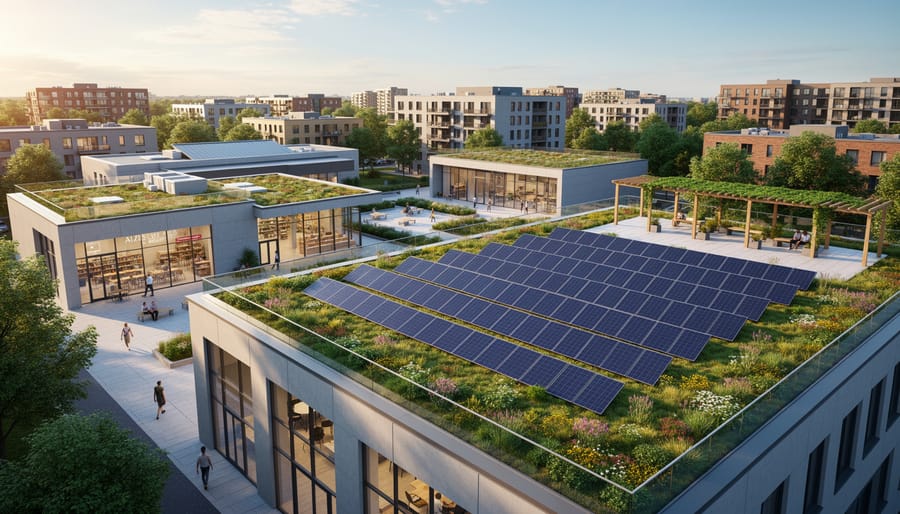
Case Study: Australian Buildings Leading the Way
Melbourne’s Council House 2 (CH2), completed in 2006, pioneered eco hybrid roofing in Australia and continues to deliver results two decades later. The building’s rooftop combines native vegetation panels with passive cooling systems, cutting energy use by 82% compared to a conventional office tower and slashing water consumption by 72%.
Real-world measurements tell the story: roof surface temperatures drop by up to 15°C on summer days, directly reducing the load on air conditioning systems. The building generates significant onsite renewable power while the green layer captures roughly 100,000 litres of stormwater annually, easing pressure on Melbourne’s drainage infrastructure.
What sets CH2 apart is community impact beyond the numbers. The rooftop has become a living classroom, hosting over 10,000 visitors yearly including school groups and industry professionals studying sustainable design. Staff report improved workplace satisfaction, citing natural light and thermal comfort as key factors.
The project demonstrates how eco hybrid roofs integrate with broader infrastructure improvements like smart grid benefits and complement a diversified renewable mix. CH2’s ongoing success proves these systems aren’t experimental, they’re proven technology delivering measurable environmental and economic returns for Australian buildings.
Benefits for Australian Homes and Businesses
Eco hybrid roofs deliver tangible advantages for Australian property owners, combining immediate cost savings with long-term environmental gains. In a climate where summer cooling expenses can dominate energy bills, these systems address both the wallet and the planet.
The most immediate benefit is reduced reliance on grid electricity. Solar panels generate clean power throughout the day, while the vegetation layer acts as natural insulation, keeping buildings cooler in scorching heat and warmer during cold snaps. This dual action can slash air conditioning costs by up to 30 percent in hot regions like Queensland and Western Australia, where rooftop temperatures often exceed 65 degrees Celsius on standard surfaces.
Key advantages include:
- Lower energy bills through on-site solar generation and reduced heating/cooling demand
- Cooler indoor temperatures year-round, improving comfort and productivity
- Reduced urban heat island effect in cities like Sydney and Melbourne
- Habitat creation for native pollinators, birds, and beneficial insects
- Stormwater retention that eases pressure on drainage systems during heavy rain
- Carbon footprint reduction supporting Australia’s net-zero commitments
Beyond individual properties, these roofs contribute to broader community resilience. In flood-prone areas such as parts of Brisbane and Newcastle, the green layer absorbs rainwater during downpours, reducing runoff that overwhelms stormwater infrastructure. Meanwhile, urban biodiversity gets a boost as rooftop gardens provide vital refuge for species struggling in built-up environments.
For businesses, there’s an added commercial edge. Buildings with eco hybrid roofs often achieve higher green star ratings, attract environmentally minded tenants, and command premium lease rates. They’re a visible commitment to sustainability that resonates with customers and stakeholders alike.
Installation and Maintenance Considerations
Installing an eco hybrid roof requires careful planning and professional expertise. Because these systems combine living vegetation with solar technology, the process is more involved than a standard roof replacement, but the long-term payoff in energy savings and environmental benefits makes it worthwhile.
Start with a structural assessment. Green roofs add weight, even extensive systems with shallow soil can add 60 to 150 kilograms per square metre when saturated, while intensive configurations can exceed 300 kilograms. A structural engineer needs to confirm your building can handle the load, and if not, you may need reinforcement before installation proceeds.
Waterproofing is non-negotiable. The membrane must be flawless, because you can’t easily access it once plants and panels are in place. Quality installations use root-resistant barriers and multi-layer waterproofing to prevent leaks and root penetration. Expect this stage to represent a significant portion of your upfront cost.
Plant selection should match your local climate zone. In Melbourne or Sydney, sedums and native grasses handle variable rainfall and temperature swings. In Brisbane or Darwin, drought-tolerant species like lomandra and native pigface thrive in heat and humidity. Your installer should recommend plants that require minimal irrigation once established, especially given Australia’s water constraints.
Integrating solar panels requires strategic placement to avoid shading vegetation while maximising sun exposure. Elevated mounting systems work well, allowing airflow beneath panels and leaving space for plant growth.
Ongoing maintenance is modest but essential. Extensive systems need quarterly weeding, annual fertilising, and irrigation during prolonged dry spells. Solar panels should be cleaned twice yearly to maintain efficiency, debris and dust accumulation can reduce output. Budget for an annual professional inspection to check waterproofing integrity, drainage function, and structural stability. With proper care, an eco hybrid roof can deliver decades of reliable performance.
Common Questions About Eco Hybrid Roofs
How much does it cost, and is it worth the investment?
Eco hybrid roofs typically cost more upfront than a standard roof or a basic solar installation alone, but the long-term savings on energy bills and stormwater management often offset the initial expense within a decade. Costs vary widely depending on the roof’s size, the depth of the growing medium, the solar capacity, and whether you’re retrofitting an existing structure or building new. Most Australian installations range from moderate to premium compared to conventional roofing, yet combining two systems, green roof and solar, in one build can be more economical than installing them separately over time.
Do eco hybrid roofs work in drought conditions?
Yes, when designed with drought-tolerant native plants and efficient irrigation systems. Many Australian installations use succulents and indigenous species that thrive with minimal water, especially during dry spells.
Can I add an eco hybrid roof to an existing building?
You can, provided the structure can handle the additional load and proper waterproofing is in place. A structural engineer and certified installer will assess feasibility before any retrofit begins.
Are there government incentives in Australia?
Some states and councils offer rebates for green roofs or solar panel installations, and combining both may qualify for multiple programs. Check local council grants and state energy schemes for current options.
How long do eco hybrid roofs last?
With regular maintenance, the green roof layer can last 30 to 50 years, and solar panels typically come with 25-year warranties. Proper care extends the life of both systems well beyond standard roofing materials.
Homeowners also ask whether these roofs integrate with other renewable setups. If you’re already running EV home power systems, an eco hybrid roof can feed into the same energy ecosystem, storing excess solar generation or supporting vehicle charging during the day. This modular approach lets you build a comprehensive renewable network tailored to your property’s needs.
Eco hybrid roofs represent a practical step toward a more sustainable, resilient built environment across Australia. By combining the energy-generating power of solar panels with the cooling, water-managing benefits of green roofing, these systems deliver measurable results: lower electricity bills, reduced urban heat, improved stormwater control, and support for local biodiversity. They align perfectly with the vision of Geo-Eco Hybrid Energy Solutions, bringing multiple environmental technologies together on one surface to maximize impact.
Whether you’re planning a new build, retrofitting an existing property, or managing a commercial facility, an eco hybrid roof can be tailored to your climate zone, budget, and sustainability goals. The technology is proven, the benefits are real, and the long-term savings make it a smart investment for homes, businesses, and communities alike.
Take the next step by consulting with certified installers who understand Australian conditions and can design a system that works for your specific needs. With the right planning and support, your roof can become more than shelter, it can become an active contributor to a cleaner, greener future.